

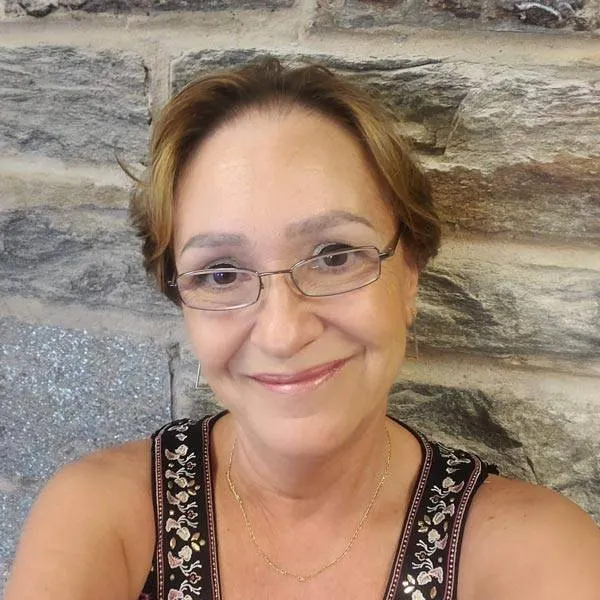
Isabel Moreno-López is the Associate Provost for Undergraduate Studies, Interim Vice President for Equity and Inclusive Excellence and a Professor of Spanish and Latinx studies at Goucher College. She is an academic, a mother and an activist.
Her educational journey is largely personal, “I have a PhD because I fell in love,” she confided. Moreno-López originally studied psychology. Except she quickly realized it wasn’t her passion, switched gears and took a gap year working in Paris. There, she found her connection with language and language learning. As a young girl, she had lived all over: Paris, Germany and Spain. Her education and identity were tied to three languages across three different countries. She started training to be a language interpreter. Her first job as an interpreter was live translation, but it didn’t go as she’d hoped. “I panicked… I was completely blocked… Needless to say, I lasted in that job one day.” Moreno-López reset and started to learn English phylogeny. After achieving her degree at the University of Grenada in Spain, she applied to do her Masters at University of Maryland, Baltimore County. Being multilingual, Moreno-López focused her studies on her experiences. Her Masters focused on language acquisition, “I started studying what I had felt in my own skin and bones.” Moreno-López was preparing to go back to Spain, but her plans were foiled when she met and fell in love with her wife. “My plan was not to fall in love with a Mexican woman, but I did.” She often jokes that the reason she got her PhD was to be with her wife, “…the only way to stay in this country was to continue my studies.”
Her PhD drew on her real-world experiences as a Spanish language teacher in the US. Her research focused on Spanish language textbooks, breaking down their harmful impact. “I was always very disappointed with Spanish textbooks,” she explained, “they reinforced stereotypes.” On top of this, they were ineffective at teaching dialogue. Recognizing this, she wanted to reform how Spanish was taught in schools. Instead of regurgitating simple dialogue, she challenged her students to think deeper. “I created a language class in which we started with politics and current events instead of talking about whether the cat is on the table.”
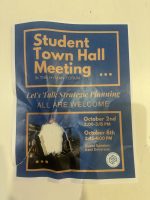
“Some students wrote [in feedback forms], ‘She has a feminist agenda,'” Moreno-López recalled. Rather than rejecting the criticism, she said it reinforced her belief that no educator is truly neutral. As a queer, Latina professor, she believes her lived experiences inevitably shape her teaching, informing the voices she includes in her curriculum and the perspectives she brings into the classroom. At the same time, those identities have also exposed her to discrimination throughout her academic career. Yet, if there is anything Moreno-López does well, it’s her ability to take challenges, reset and keep going. “In this country, Spanish speakers do not have positive stereotypes. So I’ve had to [be] very upfront about some of the things that have happened to me.” She recalls staff meetings, where she was ignored or talked over. Other times, her coworkers would paraphrase her words, trying to re-explain her point, belittling her, “…and I’ve had to say, I don’t need a translator.” Even in the classroom her student feedback forms would contain comments on her appearance, not her teaching. When she interviewed for Goucher, she didn’t hide the fact that she is a lesbian. “Things were very different. People were not out of the closet.” When she was hired, it wasn’t mentioned again. “The person I said it to kept it to themselves, hired me, but kept it to themselves because that’s how things worked.” Except Moreno-López isn’t one to stay quiet. At a town hall, she spoke out. “I took the mic and I said, ‘I’m a lesbian. I’m a faculty member. My office is in this building, in this room. Any student that needs to talk to someone like them can come and see me.’ I dropped the microphone. I started running to my office. I was so nervous. I was trembling. I was crying.” Moreno-López remarks, “We’re not where we should be yet, but we’ve come a long, long way.”
Her activism didn’t end at teaching, even in her current position as Associate Provost for Undergraduate Studies, she is pushing for reform. One example is Goucher’s academic standing letters. Morimo López rewrote the letters sent to students on academic probation after realizing the original language often left students feeling discouraged rather than supported. “I took a course to learn how to write psychologically attuned letters.” She developed a new format for letters, one informed by psychology, using a completely different tone and structure. “I saw an immediate change.” Students started to follow-up, asking for support.
Moreno-López is also an advocate for first-generation college students. “They don’t know the unspoken rules of school,” she remarks, “They don’t have anybody to explain those unwritten rules.” One way she shows this is using a party game at orientation. “I tell the incoming students, I’m organizing a party. Do you want to come? So students say, yes. And I say, “What will you bring?” She then says a list of items that corresponds to an unspoken code. For example, all the objects start with “H” or all the objects rhyme with “apple”. Everyone then has to try and decipher the code. For those who already know the code, it is much easier to play the game, but if no one has shared the code with you, it’s hard and it takes time to catch on. She uses the feeling students get not knowing the code to draw a comparison to how it feels to be a first-generation college student. “And they might be in the classroom and they’re not going to ask, what the hell is going on here?” Moreno-López’s goal is to “…try to build the system in a more equitable manner.”
Isabel Moreno-López has been an activist since her youth. “Activism means to me identifying injustice and fighting for what you believe in a just way.” In Spain, she spent the night in prison for protesting in her town. In 1987, she traveled to Mexico to volunteer with the Zapatista movement, helping recognize human rights violations. She recalls the experience with heart, “An incredible experience… scary, fascinating, interesting.” Now, her activism has evolved, in her position as professor and administrator, she is now focusing on institutional reform. “My activism now is not in the streets.” During the student encampments in 2024, her experience with activism came to a head. She saw her younger self in the protesting Goucher students. “I’m proud of my 18 year old self,” she says, “At 18, we want to change the world. We think we can change the world, and we should continue to think that. But we also think we are right and we know everything.” When it came to the encampments, Moreno-López was put in a hard position, “I was the one that was asked to suspend the students.” That said, she was also an advocate for keeping the students safe. “I played an instrumental role in keeping the police outside.” When she talked to the students afterwards, she asked them, “Were you ready to go to jail?” The response was simple: many hadn’t thought of that implication. “I realized we need to educate students.” In response, she took action. She created a seminar during first year student orientation where she talked about student activism, how to speak out and be safe. She says, “…education is the best tool.” As an activist in and outside of the workplace, Moreno-López strongly claimed, “I want to encourage activism.” When asked what students should continue challenging, Moreno-López said “everything.”
After the encampments, when she stepped into her position as Interim Vice President of Equity and Inclusive Excellence, it was in the aftermath of the elections. She recalls the first time Trump was elected. “…[M]y son woke up and said, ‘Who won?’ And I said, ‘Trump.’ And he said, ‘So you have to leave the country?’” She continues, “that’s why I became a US citizen.” Her activism was far from over. She recognizes how the change in administration has affected Goucher’s campus. “We had a staff [member] that spent one week in their basement because ICE was in their neighborhood. We’ve had students whose parents have been deported. I mean, it has been very very traumatic for members of our community. I also understand that for some members of our community, this hasn’t affected them at all.” She recalls a hard conversation she had to have with two students who had placed a Trump banner in their window. Due to reports of threats towards the students, Moreno-López met with them to offer support. “I met with them to protect them. That is a really hard thing to do. But they deserve my protection.” She had asked them, “Do you feel safe? We want you to feel safe.” As an administrator, she said, “I need to respect students’ beliefs. And I will do that.”
Moreno-López hopes that Goucher students will continue to protest injustice. “Go to NGOs… help translate… stand by people… walk them to the courthouse… participate in demonstrations.” She encourages participation, but also education. “Come back [to Goucher] and give talks, give debriefs, teach [your] peers and share [your] passion with [your] peers.” She continues, “If you don’t educate yourself… you’re never going to be able to fight for what you believe in.”
By Katherine (Kate) Wisneskey ’28
Featured Image via Goucher College’s Website





Be First to Comment