


CORRECTION 4/10/26:
This article is a transcription of a radio segment, sections of which contain live interviews with multiple subjects. An earlier version of this transcript contained the claim that part of Isabel Moreno-López’s duties as Associate Provost was representing Goucher faculty. This does not accurately portray her responsibilities as Associate Provost, which negates the previously expressed opinion that this creates a “conflict of interest.” We apologize for any harm or confusion this misconstruction may have caused.
Olivia Barnes covers changes to Goucher College’s Budget, including restructuring of the schools EIE efforts.
Produced by Kate Miller, with contributing reporting by Kate Wisneskey.
Q Radio is live, Mondays at 8pm, at goucher-radio.org. Read Q articles at quinnews.com
TRANSCRIPT
Olivia Barnes: This program was originally broadcast live on March 30, 2026. You can listen to Quindecim Radio live on goucher radio at goucher-radio.org.
Olivia Barnes: Good evening, I’m Olivia Barnes. Tonight on Quindecim Radio we will be covering the recent budgetary announcements that the president had announced to faculty just before the spring break. We’ll listen to how students and faculty are reacting to it, including some student protests last Thursday and the recent dissolution of student interest housing, gaming house, and arts and media house. President Devereaux announced to faculty on the 25th of February a collection of changes to be made to the college due to the college’s expenses outweighing its revenues. President Devereaux did not give specific numbers on how much the money is moving in and out of the college, but did specify that the school received just over 60% of its revenues from undergraduate tuition and room and board, with the remaining revenue coming from endowment, graduate tuition, and gifts and aid from donors and the state. The president also disclosed that a majority of expenses is going towards instructional expenses, followed by general administrative expenses and student services.
Olivia: President Devereaux has stated that these changes are being made with the goal of having a balanced budget by the 2027 to 2028 fiscal year. Changes being made include an elimination of three vice presidential positions, those being the VP of campus operations, the VP of equity and inclusive excellence, and the VP of marketing and communications. These positions were previously unfilled. In addition, the school has halted all active searches to fill new positions and will not be filling any positions that open up. In a subsequent town hall for students, the associate provost of undergraduate studies, Dr. Isabel Moreno-López, stated that openings will only be filled at the request of the president’s cabinet. President Devereaux also announced on February 25 that the cost of living adjustment for faculty will be reduced to 0.5%, and the overtime will not be paid except for quote, necessary personnel, unquote, and a pause on professional development measures and unnecessary travel for faculty and staff. The president also indicated that other operational expenses would be cut by 4%, and that the college’s athletics would be unaffected.
Olivia: We asked the president’s office for comment, but we were unable to reach a representative in time for broadcast. Here to talk about these cuts is Kate Wisneskey, who has been covering the cuts, especially the cuts to EIE for the Quindecim. Welcome to the show, Kate.
Kate Wisneskey: Hi.
Olivia Barnes: So, Kate, before we get started, what is EIE, and what does it look like at Goucher College?
Kate Wisneskey: So, EIE stands for Equity and Inclusive Excellence. So, a good way to look at what EIE is and what it is at Goucher is, it’s kind of Goucher’s version of DEI. And under EIE, we have our Title IX office, our launch program, and the branches of CREI.
Olivia Barnes:All right. So, with these new changes that are coming to the college, what are these changes specifically to EIE, and how do you anticipate that they’re going to affect the college?
Kate Wisneskey: So, overall, you’re seeing a general shift in focus to prospective students. So, this means current resources, attention, and planning is going to new students and retention.
Olivia Barnes: Alright. Have you been paying attention to the other changes coming to the college, and what are they going to look like outside of EIE?
Kate Wisneskey: So, there is a lot of other changes that are happening. I highly recommend that you go see my reporting in the Q in which I talk more in detail about, kind of, what his email refers to and what’s going on. Overall, even though there is a claim of limiting impact, there is going to be changes on student services. All wellness center student employees are removed starting next year. Also paid hours for all student employees have been substantially cut. And there is currently no school chaplain that search has stopped and has now been cut off with the hiring freeze. And that means we, as a [non] denominational school who try to hold space for religious and spiritual support, do not have a stand-in chaplain. And again, like I said, attention is going to be focusing on students coming in. Monetary attention, resources are going to be going towards admissions.
Olivia Barnes: Alright, before you go, do you have any parting words?
Kate Wisneskey: This is one of the reasons that I cannot stress how important the student elections, SGA elections, this year are. These are the people who are going to be the front lines talking to Kent about these budget reductions going to be the person who is going to advocate for our student body. So listen in this Wednesday at 8pm for my interview with Evangeline and her VP Kalyia. And also listen in to my interview with Max this Friday [Saturday] at 7pm. I am going to ask them about their efforts to protect student services, to support EIE and work with the administration to put the attention back on current students.
Olivia Barnes: Alright Thank you. That was Kate Wisnesky. You can read her articles on EIE in the recent issue of the Quindecim and obviously she will be interviewing our SGA presidential candidates this week as she mentioned. Kate, thank you for being here.
Kate Wisneskey: Thank you so much for having me.
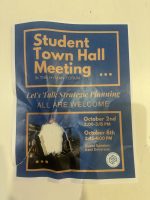
Olivia Barnes: Alright. Last Tuesday, on the 24th of March, Dr. Moreno-López, who as Kate mentioned is the associate provost for undergraduate studies, on top of being the interim president for EIE, held a town hall for students concerning these changes to EIE. Catia Rembert, who is the associate director of EIE and Kirsten Wood, the deputy Title IX coordinator, were also in attendance. Dr. Moreno-López opened the town hall with highlights of her work regarding EIE, such as the college activism session for students and revamping the bias protocol. There was also considerable time spent discussing the college’s efforts in reaction and anticipation of ICE activity.
Olivia: Dr. Moreno-López stated that the school has been making active efforts in preparation, including a review of the school’s policies and procedures, tabletop simulations for faculty and staff, and requiring one card access for the Athenaeum, the SRC, and academic buildings. Regarding ICE entering buildings on campus without a warrant, Dr. Moreno-López added, quote, if they come into a building unlawfully, they will be fought in a court of law, unquote. Ezra Burke, who later that week held a protest in reaction to changes in EIE, asked Dr. Moreno- López if the school would consider becoming a closed campus to better keep ICE officers away from students. Dr. Moreno-López responded, quote, this has been discussed. The thing is, we are such an open campus that it is impossible, unquote.
Olivia: When we followed up with Dr. Moreno-López, she stated that she had since discussed this with legal counsel, who had concluded that a closed campus was impossible given the geography of the college. At the same town hall, Kirsten Wood of the Office of Title IX announced that the webpage for the Office of Title IX would be updated with flowcharts for students to learn more about the reporting process, Wood also emphasized to students that if they were to complain about Title IX violations, the accused party would not be notified until a formal investigation began. Catia Rembert, the associate director of EIE, also championed programming from CREI such as the Affinity Month programming for Black History Month, Women’s History Month, and College Pride Month. Two days after the town hall, on Thursday, March 26, Ezra Burke led a protest with Max Ravnitzky in support of the quote, independent EIE, unquote. The students had a petition that they were trying to get students to sign which led to over 110 signatures. The Q was able to get an interview with Mr. Burke and Mr. Ravnitzky.
Ezra Burke: He/They, I am a sophomore at Goucher College, and I’m the official organizer of the Gophers for an Independent EIE Demonstration.
Olivia Barnes: So, oh, and also we also have Max Ravnitzky here.
Max Ravnitzky: Hello, my name is Max Ravnitzky. I am a student leader and a second year and a fellow organizer of this EIE protest.
Olivia Barnes: So what are, I mean, obviously you have like a letter that is very, a petition rather, that has a clear list of demands. I’m not going to ask you to name all of them, but could you go through in broad strokes what are, sort of, the aggregators, if that makes sense? Aggravators, excuse me.
Ezra Burke: Yeah, so basically our biggest concern right now is the fact that the open VP position for EIE, which was held in the interim by Dr. Isabel Moreno-López, was completely axed and the entirety of the division of EIE was placed under Academic Affairs. What initially got me concerned about this was thinking about the fact that EIE oversees the Office of Title IX, and for EIE to be placed under Academic Affairs, that means if students have concerns and are making reports that involve professors, they’re making those reports to the colleagues of those professors, and I don’t think that’s fair to ask of anyone.
Olivia Barnes: Okay, so you’ve got this petition, you’ve got all these students coming by and signing it, you’ve got students seeing it. Do you, how do you think you’re going to be successful? Like what are the next steps from here and where do you see this going?
Ezra Burke: Yeah, so right now I can say that we handed out over 100 informational brochures about the recent restructuring of EIE, and we have cleared 75 signatures about two hours into the demonstration at this time. So I’m really optimistic, we’ve had a lot of support from active students on campus, student leadership, and the general student body.
Max Ravnitzky: The next clear step is we are going to take this to the cabinet and probably the board of trustees, because ultimately these decisions were made financially without considering the consequences, and so both groups need to consider their options, and then we have considerations for follow-up actions.
Olivia Barnes: Okay, I’ve got two more questions. So both of you are obviously connected to the Ravnitzky Azeez ticket. Obviously Max, you are on the ticket and you are on, you’re the campaign manager, right Ezra? So is this obviously being that you all are connected to this and you’re doing this in a public way, is this in any way a political play or a way to get attention on your campaign?
Ezra Burke: I don’t see it as a political play. I was very intentional about making sure that I was the primary name associated with organizing the demonstration because I wanted to make sure that it was separate from Max’s campaign and Max’s other roles on campus. But it also does absolutely reflect the values that Max and I individually hold, which is something that students will want to know going into the election.
Max Ravnitzky: I would add that all four candidates have shown up, or are planning, have told me that they’re going to show up. So this is both tickets. This is, the whole Goucher community believes in this. This isn’t a campaign thing. This was organized before we were allowed to start that. Although again, as my campaign manager said, this represents a core value that I have, but this is not affiliated with the campaign.
Olivia Barnes: And then one last one just for you, Max. We covered this actually. You had the first ever protest under the new protest policy way back a year ago. What has been the difference for you between your first protest, which was, I don’t know how you would describe it. I don’t want to put words in your mouth, but it was definitely of a different nature than this one. Could you talk about the differences in both the process of going through that and sort of the results of it?
Max Ravnitzky: I should first note that since the last protest, the demonstration policy was changed in ways that are both positive and negative, partially as a result of my protest. I think there’s a difference in that there’s significantly more student support for this. And we have a specific set of goals versus the last one was more to generate conversation and to have the demonstration policy changed. I think the problems with the demonstration policy is symbolic of problems with our community and with how administration communicates and deals with students.
Olivia Barnes: Thank you both for your time.
Olivia: Among their demands were that the division of EIE remain independent, which was contested by Dr. Moreno-López when we followed up for comment. Doctor Moreno-López emphasized that the Division of EIE was only in existence for eleven months before it was moved to be under academic affairs. Here’s a student we were able to interview about why they were participating in the protest.
Olivia Barnes: Okay, could you give me your name and your year and also your pronouns?
Corinne: Corinne, she/her, and I’m a first year.
Olivia Barnes: Alright, could you tell me, you’ve got this sign here, what does it say?
Corinne: It says liberal arts, then around all of the arts. It has a lot of Goucher’s core values like community, social justice, diversity, things like that. Then at the bottom it says global change makers with change in all bold.
Olivia Barnes: I’m seeing specific things, do you mind if I ask you about them?
Corinne: No problem.
Olivia Barnes: Okay, one of the ones that stands out to me right away is student security. What does that mean to you, like when you wrote it on the sign?
Corinne: So when I wrote it on the sign, I was thinking mostly about the thing that they said about Arts and Media House, Gaming House going down. So I’m thinking, student security as in their ability to feel secure in their housing, feel secure in their environment. So something is, you know, suddenly changed or taken away from them with no good reason given. I think that really takes away from a student’s sense of feeling secure in their campus environment.
Olivia Barnes: Okay, the school has recently, they’ve announced a bunch of changes with like the doors for instance, with having them locked with concerns about ICE. How does that, as a student, does that make you feel any more secure? Does it maybe make you feel less secure? How does it, like, how does it, within that framework?
Corinne: I think that it makes me feel more secure, but I feel as though this is something that should have been implemented sooner anyway. Because one, we’re a private campus and I know we give out, like, memberships and things to outside parties. So like, kind of anyone can come on campus. But I feel like this is something that really should have been implemented sooner for student security.
Corinne: Like I remember when I first got here, that was already a concern. I can walk into any building. Yes, because I’m a student, but anyone on campus could as well. And also, I think that they should have put signs on the doors with students’ rights. So in addition to having them locked, if ICE or any immigration protocol tried to come on campus, they would be able to immediately read off the door or not have to look it up. Basically, feel secure that they would know what to do if something like that arises.
Olivia Barnes: There’s another one I have a question for. You have trust right in the middle of the A, in the little circle of the A. What, how do you feel like that’s a value of Goucher and how do you feel like that’s represented or not represented?
Corinne: Well, when I put it on my sign, I’m thinking trust as in the student’s ability to trust administration. Trust the decisions that are being made by our leaders at Goucher. So people who are making the budget cuts or people who are making these decisions to cut housing or funding to certain things. And I think it’s the fact that students should be able to trust that their services are provided to them. Students should be able to trust that they’re going to get the services that they’re paying tuition for, and how they’re represented at Goucher. I feel as though with some things they are, so we are informed about certain things. Like the fact that they’re going to cut Arts and Media House and Gaming House and budget cuts. But it’s underrepresented in the fact that we’re not getting the why. We’re just getting, you know, really vague emails, vague things like that where it leaves us all confused. And as a student body, we shouldn’t feel confused about the policies and decisions that our college is making on our behalf.
Olivia Barnes: Before I go, do you have any of the values that you’ve written that you want to explain?
Corinne: I think where I have adaptability and improvement and just change. Because I think, you know, any college, any place, any organization is going to, you know, have things that they can improve upon because no system is perfect. But I think it’s just the fact that we should be able to adapt and improve and be willing to hear students’ voices on that. Thank you for your time.
Olivia Barnes: Dr. Moreno-López also contended that EIE still maintains an independent budget. She also emphasized that EIE’s budget of $350,000 had previously been earmarked by the federal government, but that that money had been rescinded by the Trump administration. Here’s a student with their thoughts.
Quinn: My name’s Quinn. I’m a senior. I don’t use any gendered pronouns. I prefer people just use my name.
Olivia Barnes: All right. So I guess I just want to get your thoughts. Have you looked at the materials? Do you have any reactions to it?
Quinn: Yeah, sure did look at the stuff. Yeah, I think it’s, the demands are very reasonable. I agree with all of them.
Olivia Barnes: Could you actually, for my audience if you don’t mind, could you like tell, say what the demands are, at least from how you interpret them?
Quinn: Oh, yeah, totally. I mean, I mean, there’s a lot of different ones, but in general, it’s to have an independent office of, what is the actual thing they call it now?
Olivia Barnes: Equity and inclusive excellence.
Quinn: Yeah, EIE, because the, like with it being sorted into like underneath the provost, like there’s just going to be so many, like, conflicts of interest that come up with that. And it in general, like reflects a lack of care when it comes to this that is concerning. The, like there definitely needs to be more staff and the one of the aspects of.
Olivia Barnes: Well, one of the- here I can maybe help you out here. One of the things I mentioned, I believe, or at least one of the recent changes though as announced by the Goucher’s plans for the future is a halt on hiring.
Quinn: Yeah, yeah, that is wild. I understand that goucher is struggling a lot with budget stuff right now and that includes hiring. But in general, I think they have. We all kind of know Goucher’s falling apart in some ways. And I think there’s been a huge focus on the budget being the reason for that. But I think a huge part, belonging and like a sense of connection and support is a big part of why that is happening. And they are cutting more and more of the programs that help with that.
Olivia Barnes: Do you have any, like, examples of that?
Quinn: Yeah, yeah, yeah. I mean the, so, oh yeah, let me think of a good example. I can give an example related to accessibility stuff. So one of the many things that happened that I was promised when I first got here was that the Loop comes on campus and that it would be, and that I would have an accessible way to get off campus, which is something I really need. But in reality, it’s not here. And they even moved the station farther to more in front of Edenwald. The reason I’ve been given for, like, why it is not here is because it costs a lot to have the stop on campus. And it would be one thing if it was just the money problem. But it’s the fact that they say it is accessible, that they say there’s a place for disabled students. But then in reality, they, like, there just isn’t. It would be a lot easier to deal with if it just wasn’t there versus if they were like, you are accepted here. And there is a thing for you when it turns out there’s not.
Olivia Barnes: Do you have any, like, closing remarks or anything? Did you sign the petition? There’s a petition.
Quinn: Yeah, I did sign the petition.
Olivia Barnes: Here’s a question I can ask you. So the school itself is in the red. Like how do you think, I mean obviously neither of us are treasurers of the college or chief financial officers. But, is there, do you see a solution or do you see a way that the college could be meeting these needs while also being financially viable?
Quinn: I mean I think, I mean better communication with students in general and allowing for more student independence in some ways. I think there is the short term to think about but there is also the long term of, like, colleges operate off that investment system of like, there’s the initial investment of tuition but they are also depending on, like, alumni to come back and give money.
But when the alumni feel no connection to the school, they’re not going to get the money. So I think, like, the short term is a concern but there’s also the long term.
The, let me give some more, like, explicit things. I think like including students, trustees and students are really separated for one. And like trustees make a lot of, the board of trustees makes a lot of decisions around what happens.
Olivia Barnes: Do you know any trustees? Like, if you saw trustees would you be able to recognize them?
Quinn: Absolutely not, no way. Like, yeah, no, I would not.
Olivia Barnes: Regarding concerns that the offices under EIE would lose their independence, Moreno-López noted that Title IX and CREI had previously fallen under student affairs and that launch previously fell under enrollment management. She also noted that the office of Title IX had a full-time staff member and deputy director Kirsten Wood and that the office would maintain its previous confidentiality. Students had concerns about budgetary changes in general. Among the grievances expressed by the students was the suspension of special housing programs for Gaming House and Arts and Media House, which was announced on March 12. The following sources were granted anonymity for their interview.
Student 3: I will say that I am a senior at Goucher College. I’ve been here since spring of 2023. I feel that Goucher has a history. As long as I have been here, I have been concerned about the various issues that have come up, whether they be like when I was first here and there were issues where folks were coming into the dorms and someone had written racist graffiti on someone’s board and nothing seemed to be done about it. We didn’t really talk about it. We didn’t do anything about it. The administration didn’t say much about it at all. And there was no movement on that and that really surprised me. And then I felt like I was continuing to be surprised later on when the encampment happened. I think that was in 2023. It was 2024.
Student 3: Yeah. And I felt that Goucher did not do anything after that point when there was so much, like there were demands, there were strong feelings, there was a lot going on. But Goucher, and everyone felt very slighted by the school, but Goucher did not do anything after that point to increase goodwill between students and administrators. And I feel like what we’re seeing now with EIE is really in line with that same thing which continues to shock me, which is that Goucher does not seem to be willing to have a dialogue with students directly about what they need and how they can advocate for themselves. And I feel like these offices, Title IX and CREI, these are places which are designed for students to be advocating for themselves and support students with various resources. And I feel like to manage them in this way, it is ultimately feeling like really disrespectful. And like I said, just in line with that same feeling of like they don’t care about having goodwill with students. And I think that’s what I have to say on the issue.
Olivia Barnes: Thank you.
Olivia: The Quindecim asked Director April Lee of the Office of Student Housing for comment for this article, but she declined to comment.
Olivia: So yeah, you said that you are in special housing. How have the recent changes to, well first of all, if you’re willing, what special housing are you in?
Student 4: I’m currently in the Gaming House in the trustees second floor.
Olivia Barnes: And how they’ve recently, if I’m correct, they’ve axed the program, no?
Student 4: They’ve axed everything but the language house because that one is academically useful.
Olivia Barnes: How has this affected you, like as a resident?
Student 4: It helped me stay with my friends and make more which helped build community, which is something Goucher is always saying they want to help build. When I feel like cutting out the different housings gets rid of that whole community building thing they want, which is going to make it harder for people to like find people with similar interests because that’s gone.
Olivia Barnes: Could you elaborate on, like, if you don’t mind, like how the, like, being able to find people with the same special interest? Like how has that affected your experience here at Goucher?
Student 4: It’s helped me a lot. I have a hard time talking to people often. So when it was like Gaming House with people like board games and video games, I really liked those. So I was like, “I have already have something in common I can talk to people about without feeling like I’m guessing all the time”. So it helped me, like, keep my friends that I currently have because we live together and I think make more.
Olivia Barnes: Alright, thank you so much.
Olivia: That’s all for our show today. I’m Olivia Barnes for the Quindecim and for Goucher College Student Radio. You can read more articles from the Q at QuinnNews.com. You can listen to Goucher Radio at goucher.edu/radio or you can listen to us on demand in your podcast feeds under Rowdy Radio. We’ve got contributing reporting for this article from Kate Wisneskey. This episode was produced by Kate Miller. We’ll be back next week at the same time for more news and reporting from the Q. Thank you and good night.




Be First to Comment