


Recently, a first-year friend of mine was offered a single room in Robinson House, one of the four dormitories in Heubeck Hall. Knowing what to expect as a Gamble House resident, I advised them to tour the room before committing to it. What they found—shoddy furniture, a moldy mattress, a closet with dead bugs inside, and a window they couldn’t close—was enough to bring them to tears. “I knew it was bad in here, but I didn’t know it was this bad.”
In that moment, I saw housing at Goucher College through brand new eyes. The college loves to show off its First Year Village, the clean, modern set of dormitories where student life begins… but they don’t like to talk about the quality drop in housing for upperclassmen. If you can’t afford to live in Welsh Hall or miss out on living in Trustees Hall, you get placed in one of the oldest dormitories on campus, and it feels like a bait-and-switch.
Even by my standards as a NYC apartment-dweller, Heubeck Hall sucks. Everyone I know that lives here has reported something that’s never been fixed, and we’re all tired of the silence. Dear reader, let’s break it together—here are all of the issues with Heubeck Hall.
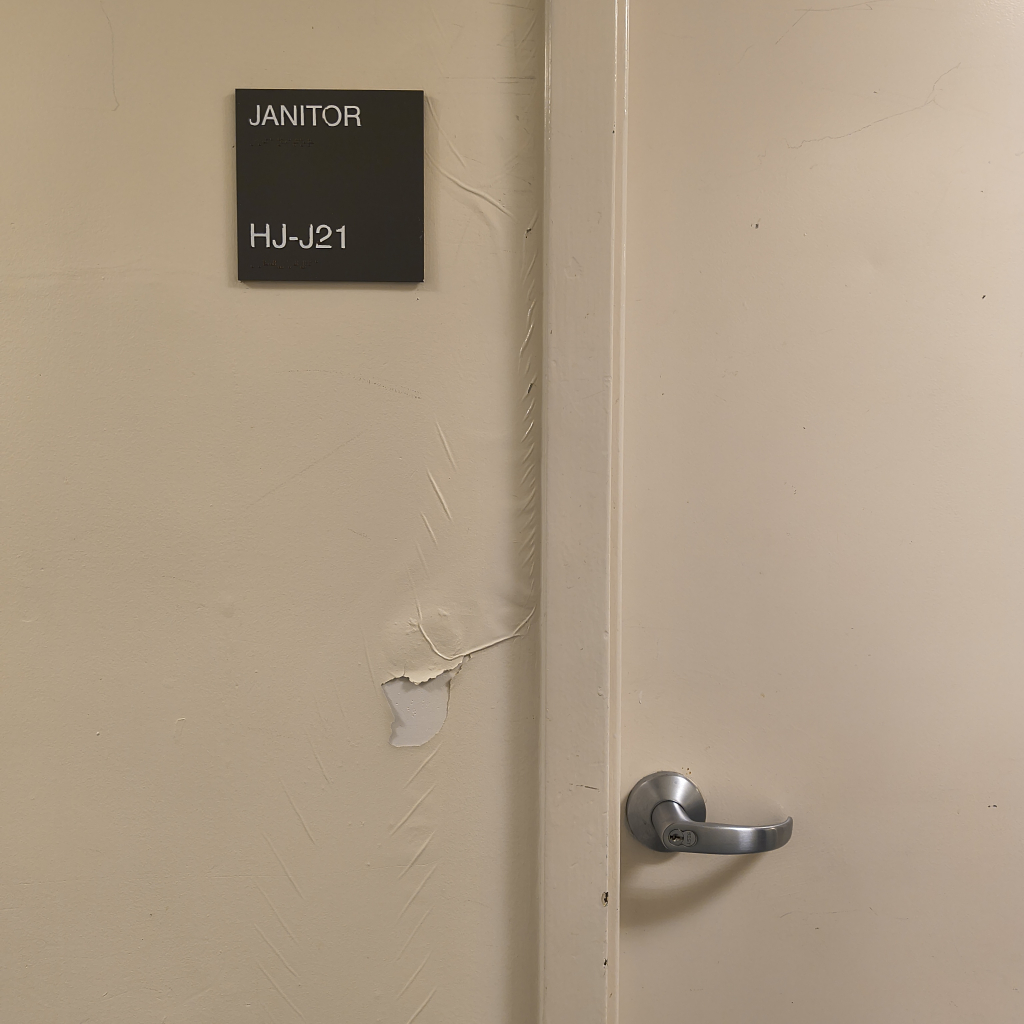
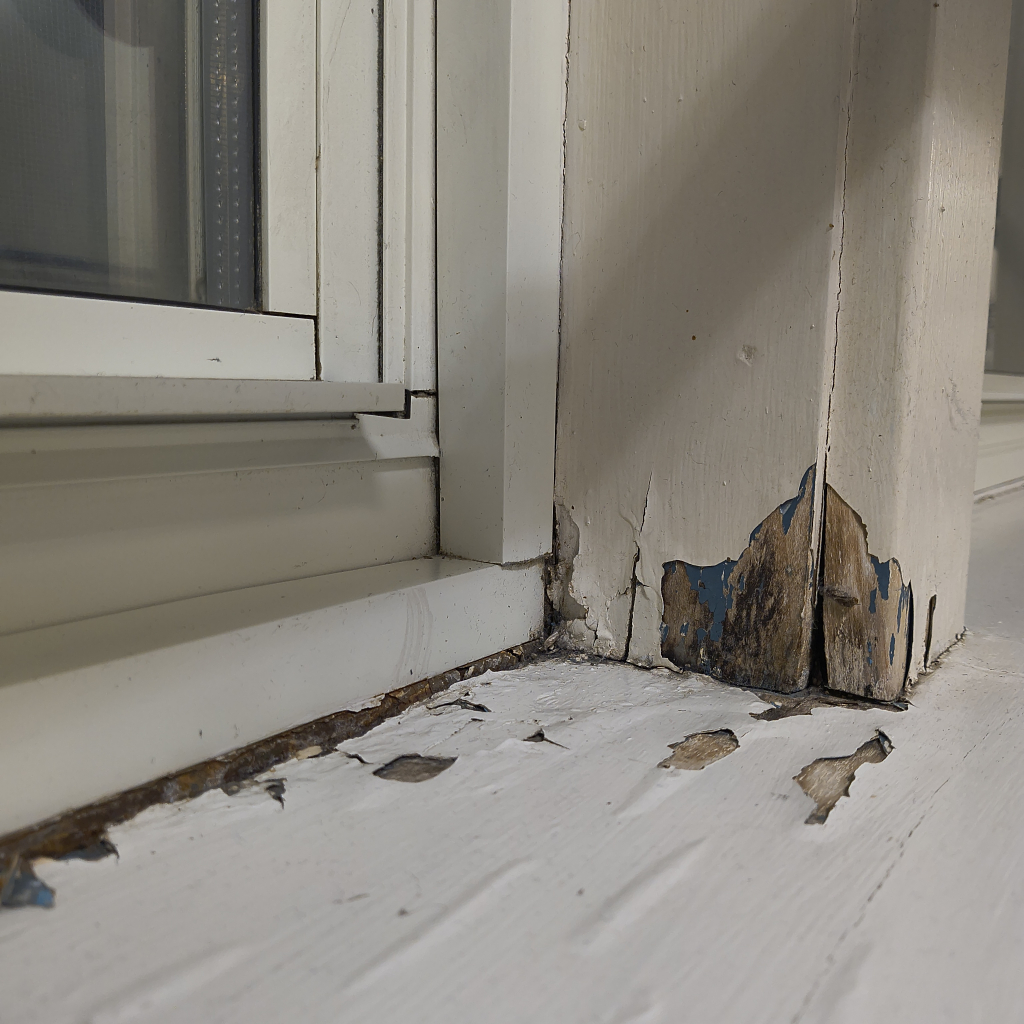
The biggest structural issue is water intrusion. Every area of the building has stains caused by bad weather or leaky pipes, and at least one area has visible mold. Some of the paint has even rippled from water in the walls. Considering residents of Bennett and Gamble Houses were temporarily relocated in 2025 for water intrusion-related repairs, I am surprised the issue remains so widespread.
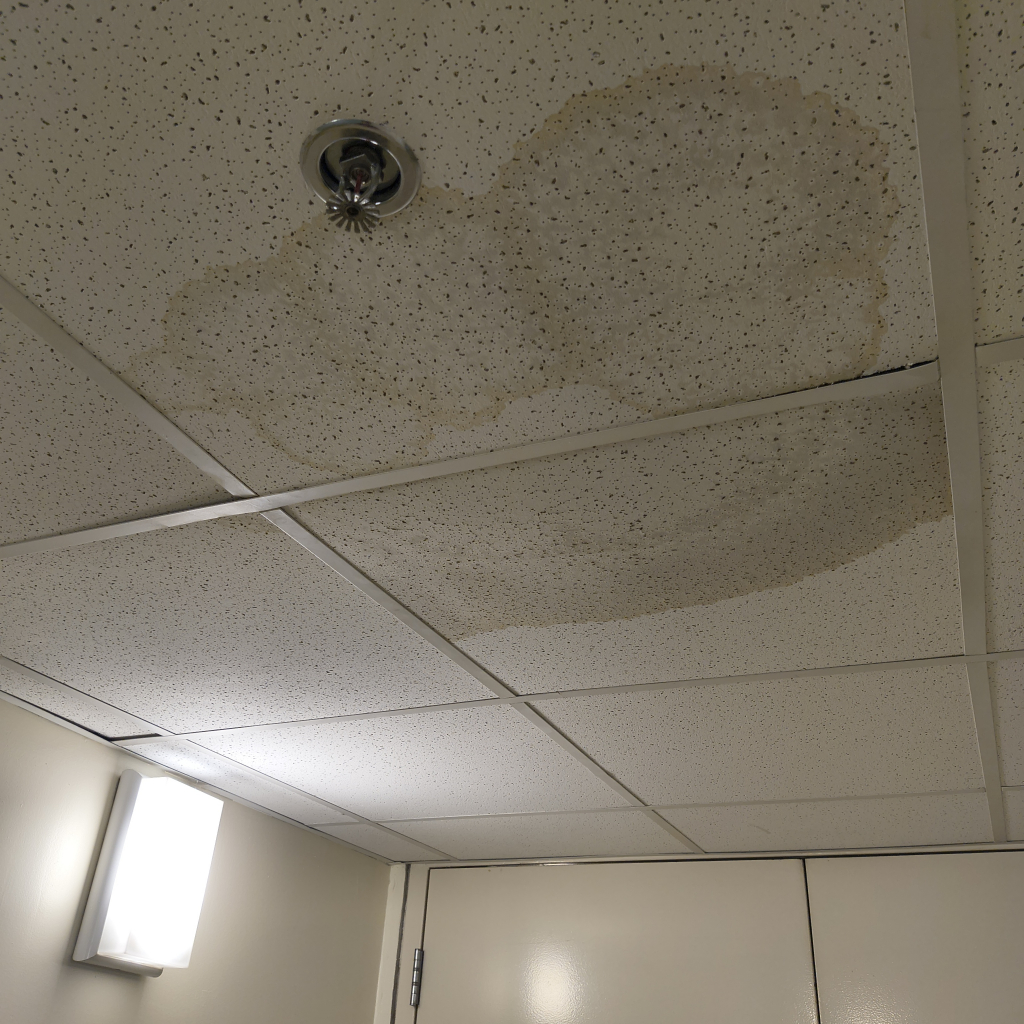
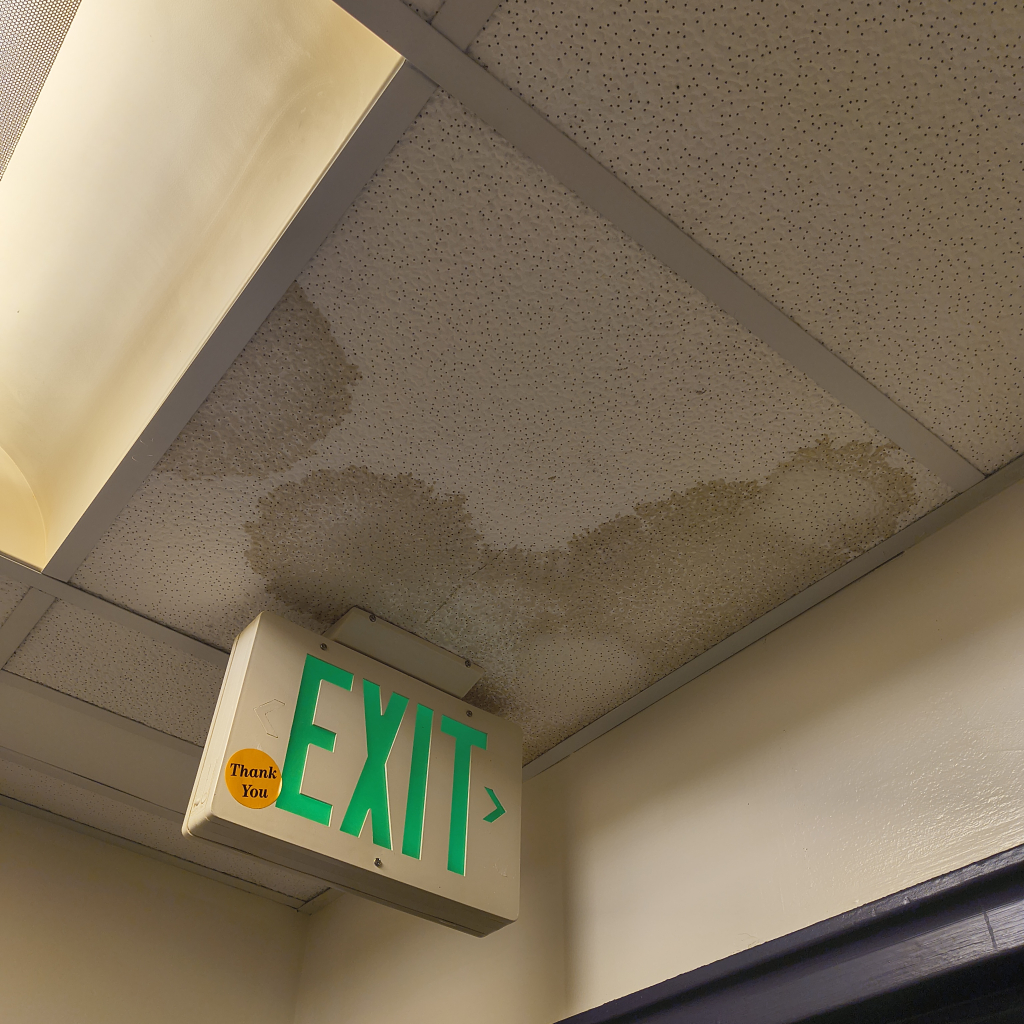
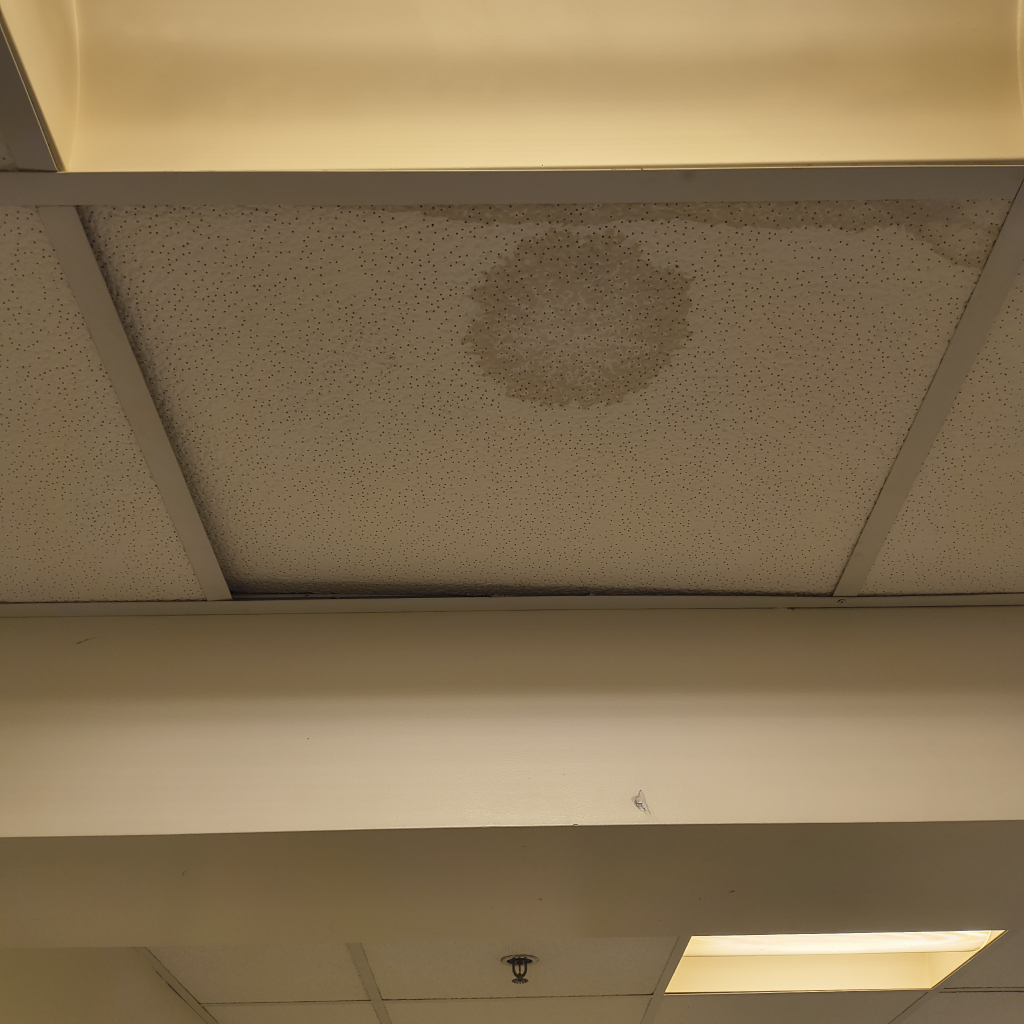
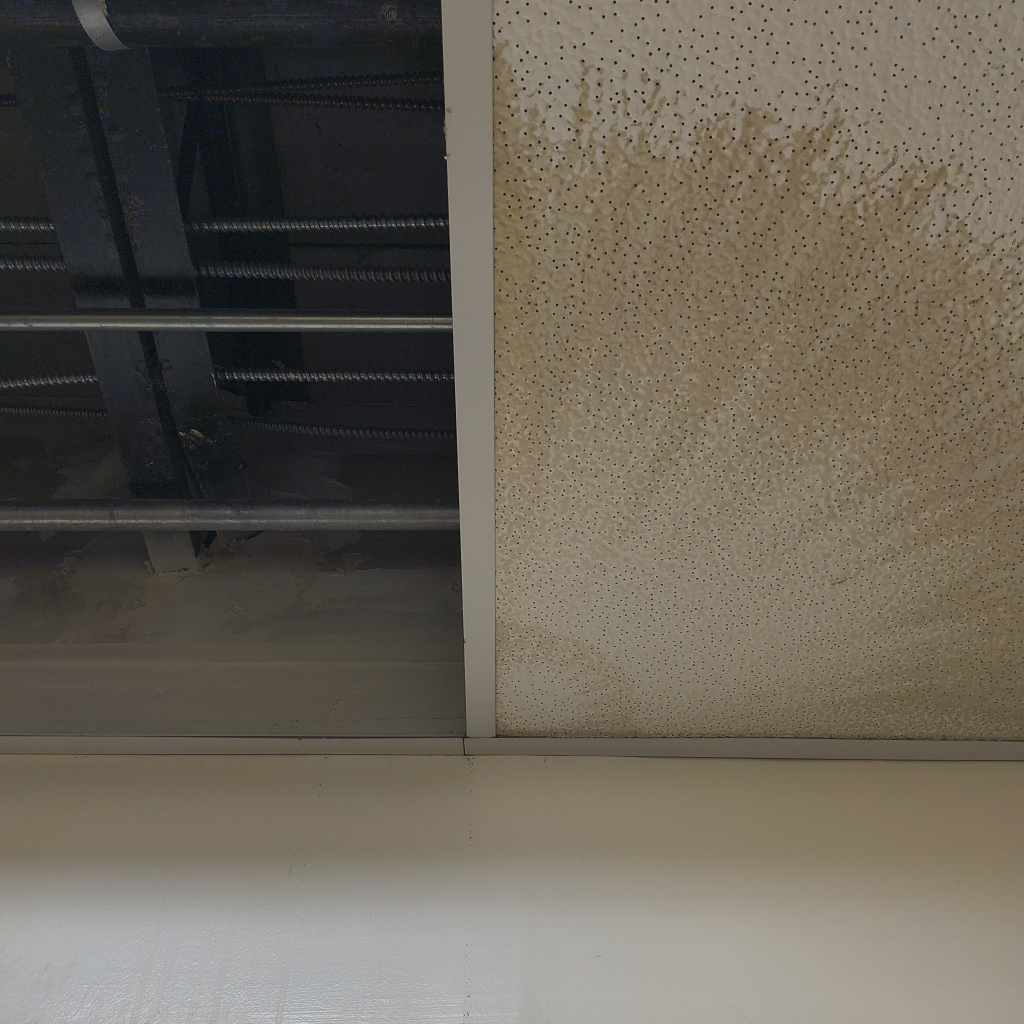
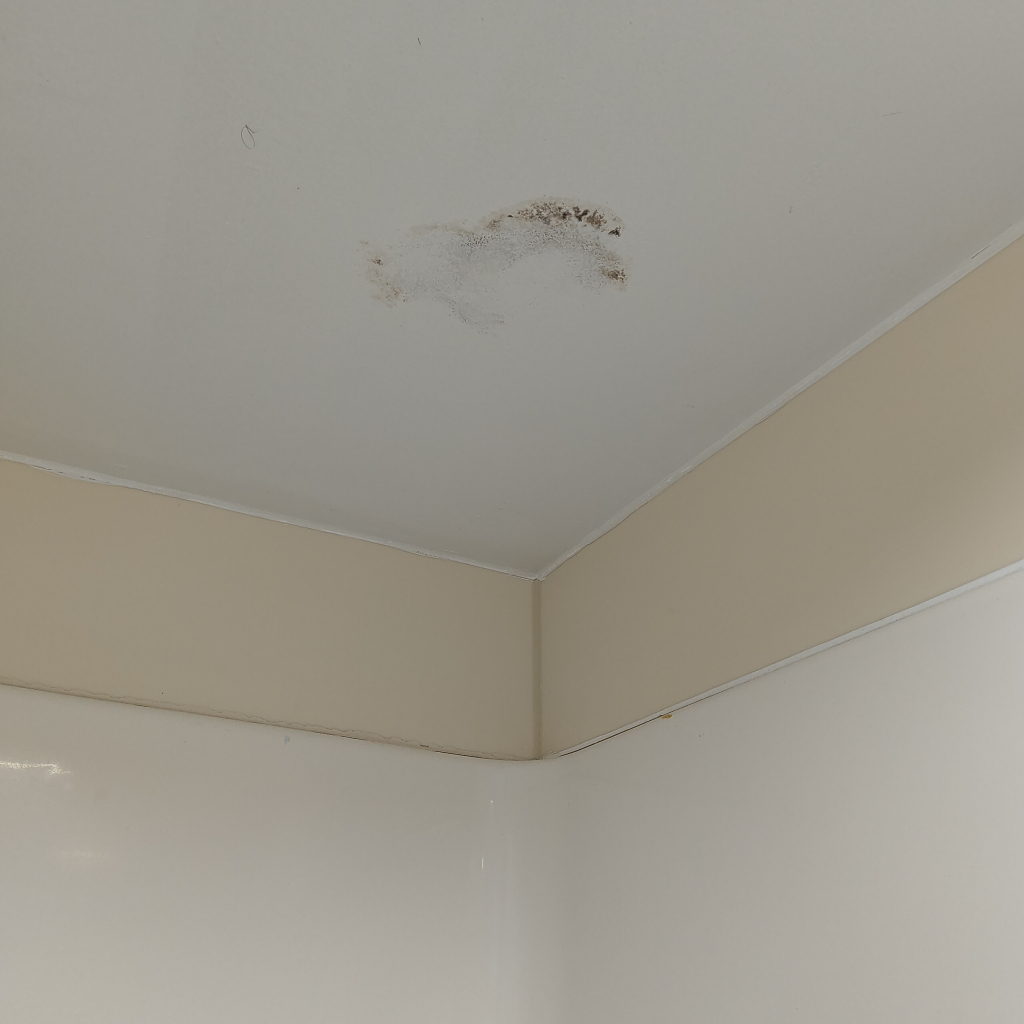
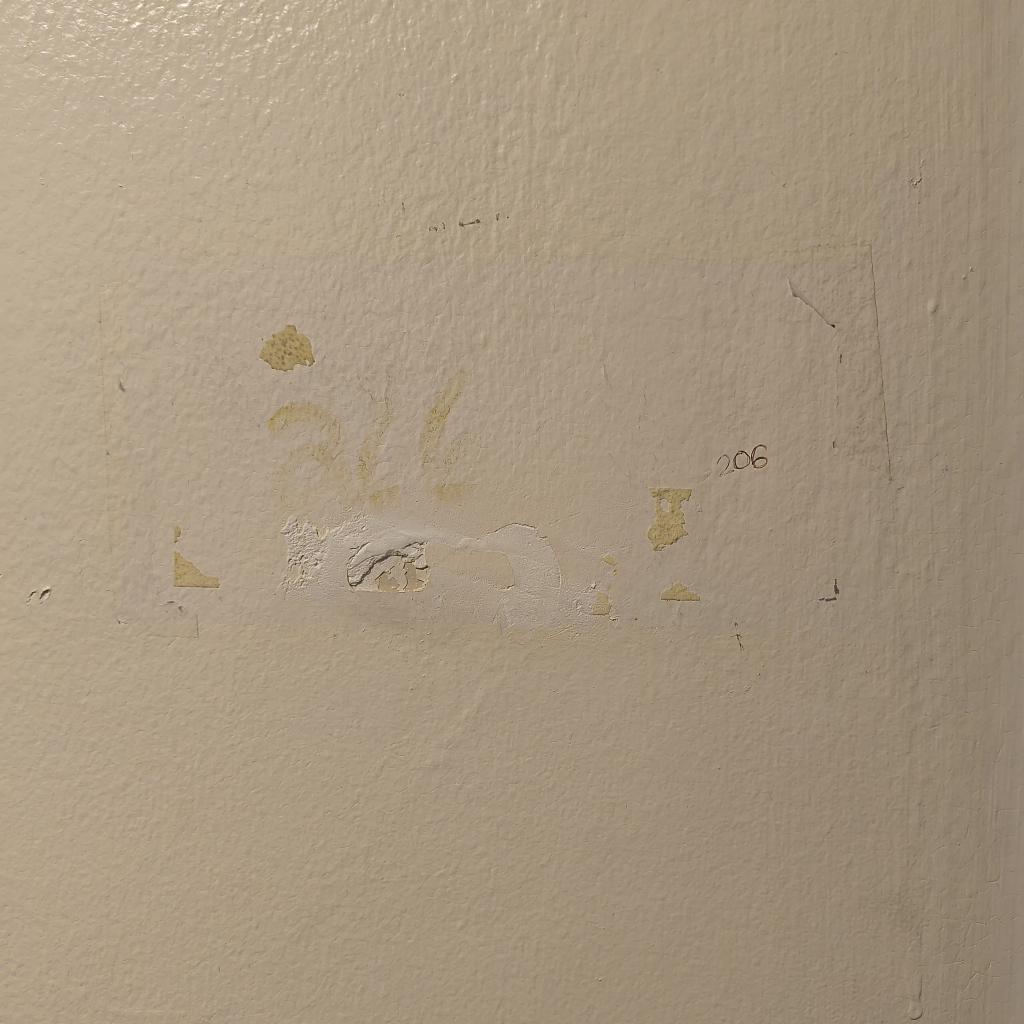
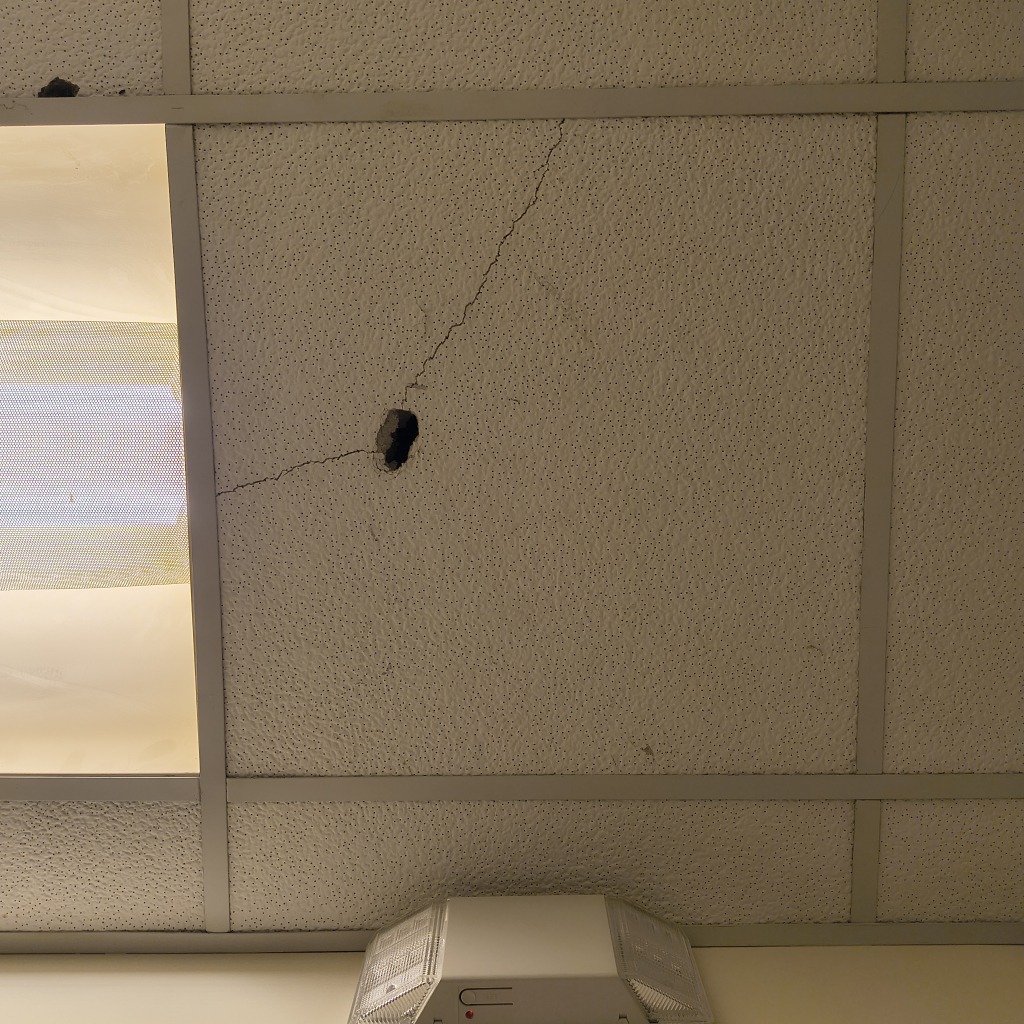
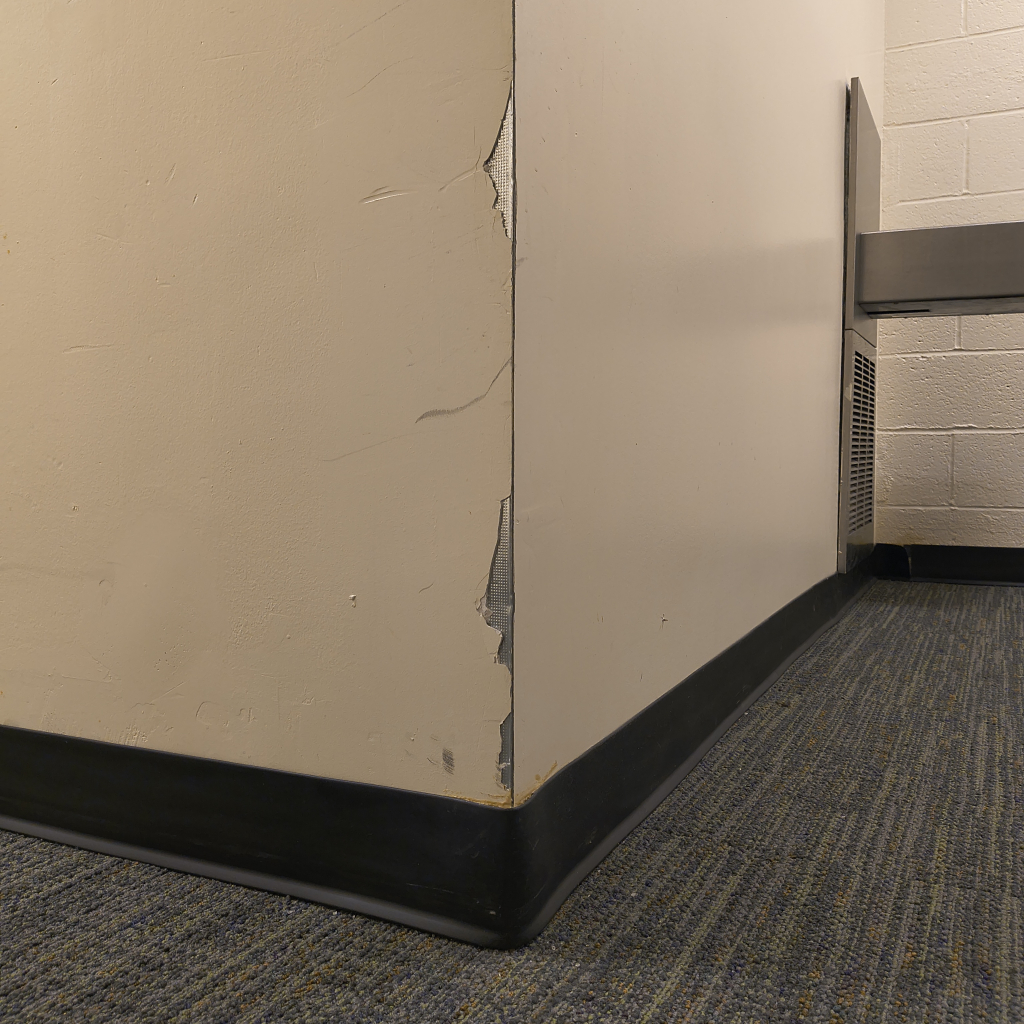
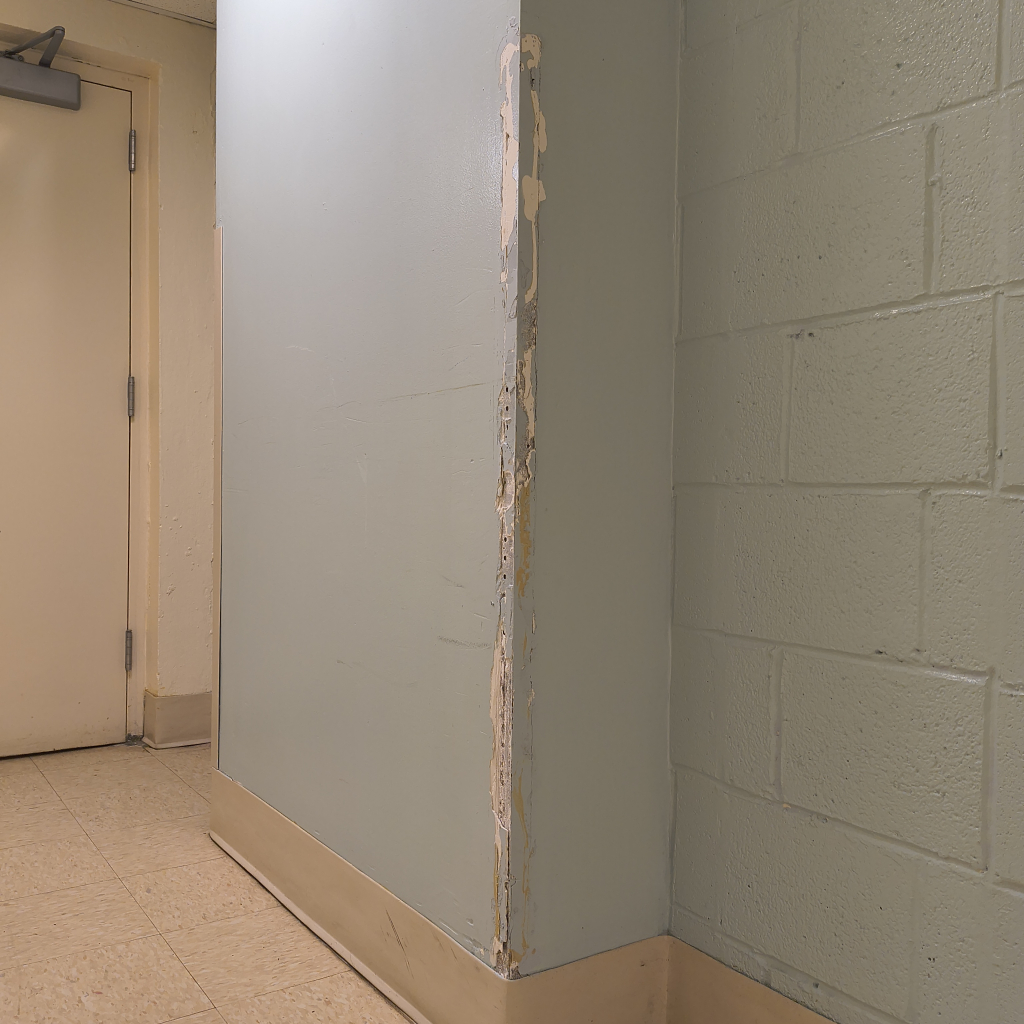
Structural decay is also an issue. Ceiling panels are missing, poorly aligned, or have holes in them. Columns and walls have exposed mesh, drywall, or wood, and one of the trims in Jeffrey House has paper towels lodged inside it. The floor of the building’s only elevator is cracked, posing a safety risk to wheelchair users.
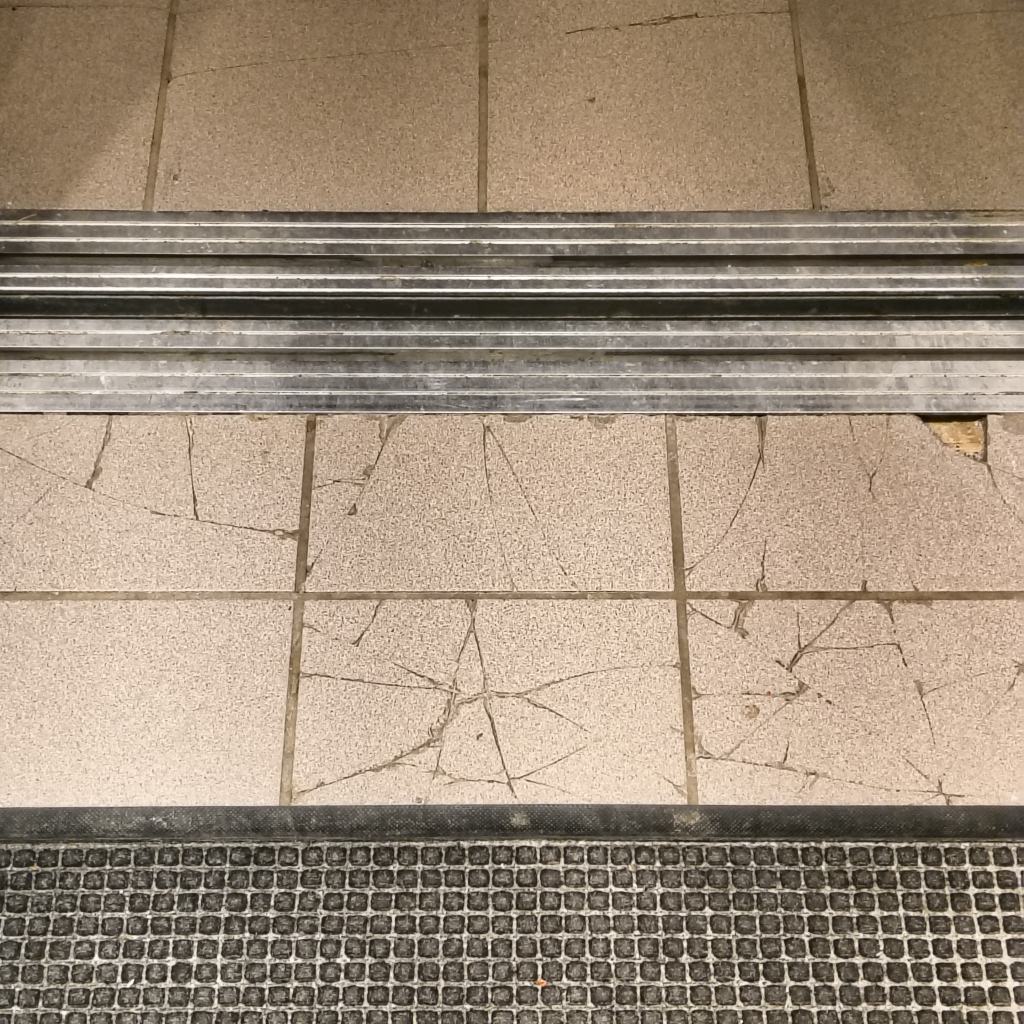
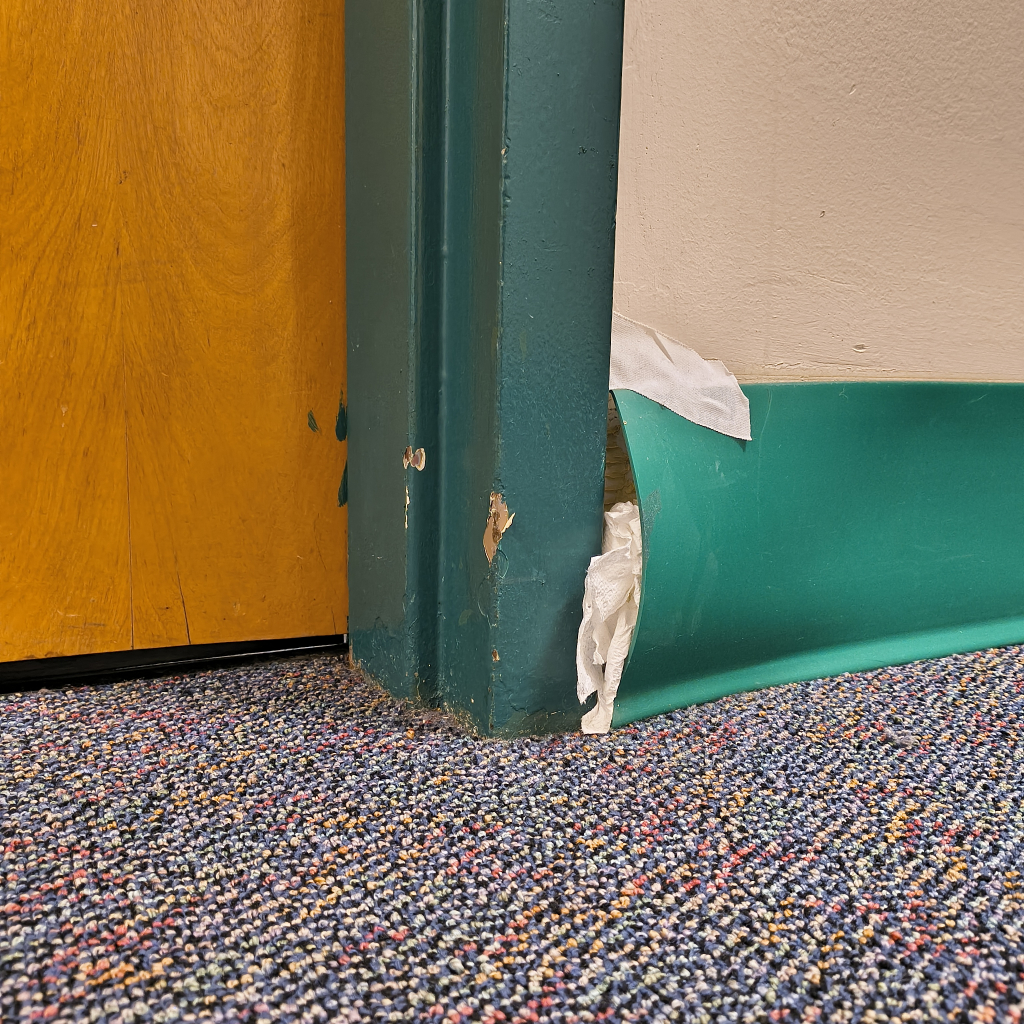
Julian Yaffe ’27 who lives in Gamble House, noted that “The drain pipe on the back side of Gamble fell off about two weeks ago, and I reported it basically as soon as it happened, and no repairs have been made.”
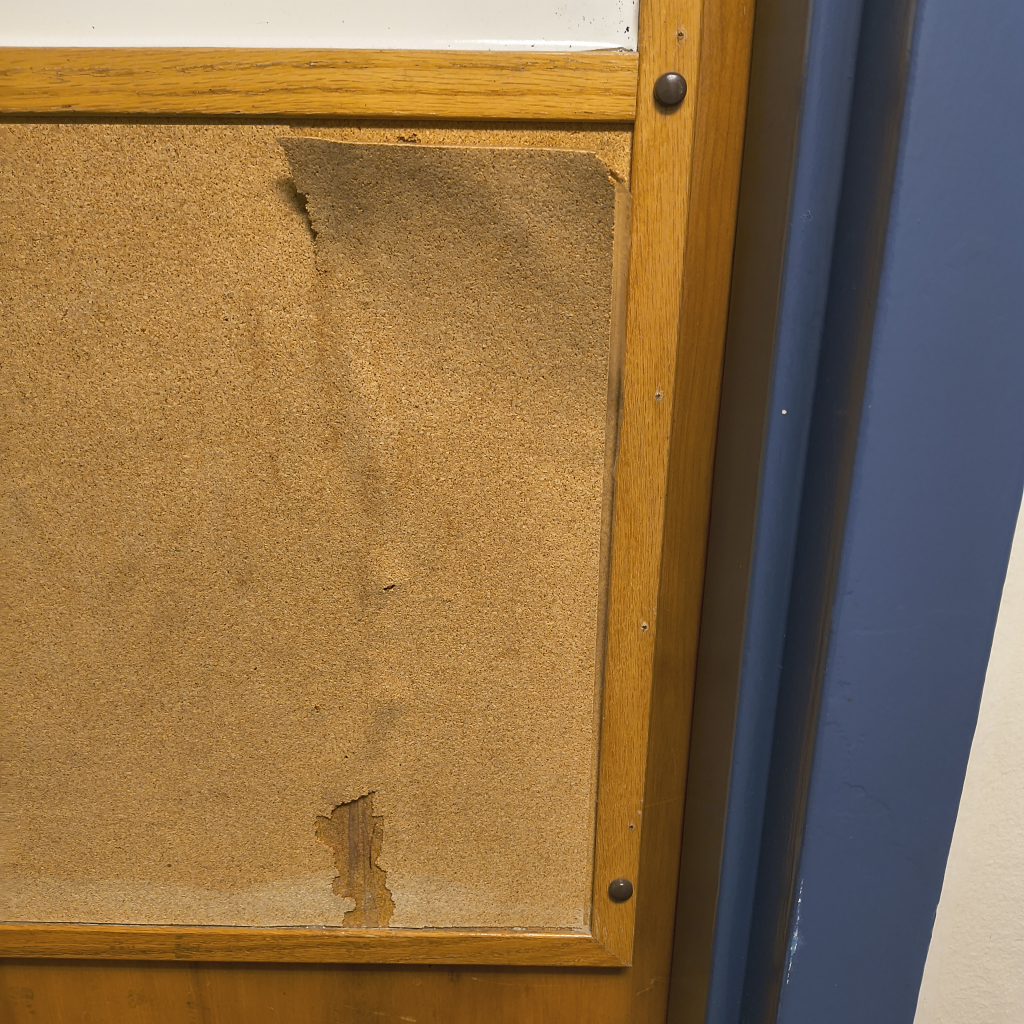
The quality of facilities is poor. Very few thermostats work properly—some are blank, most do not respect their set temperature, and some come loose at the slightest provocation. There are also whiteboards and corkboards peeling off doors, outlet covers with cracks in them, showers that have not worked for months, and… whatever caused that paper towel dispenser to be moved so low.
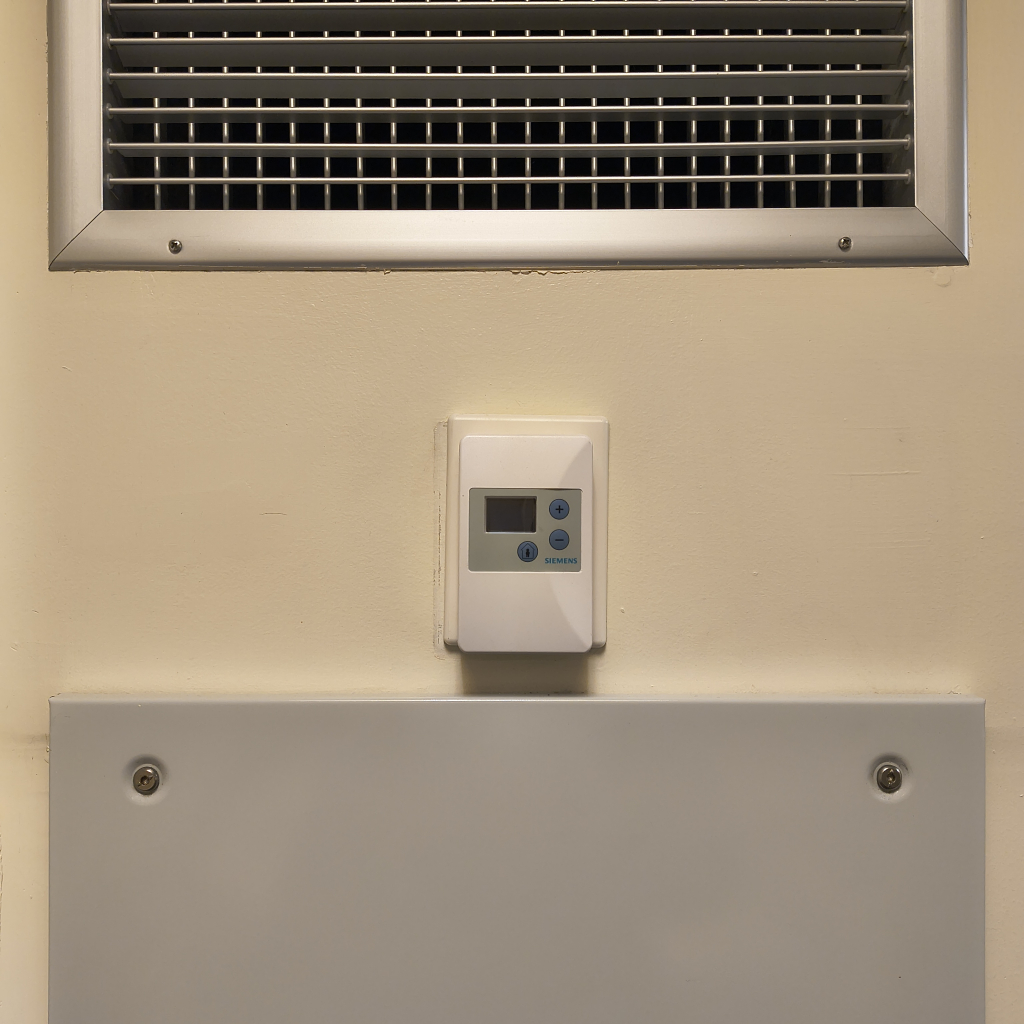
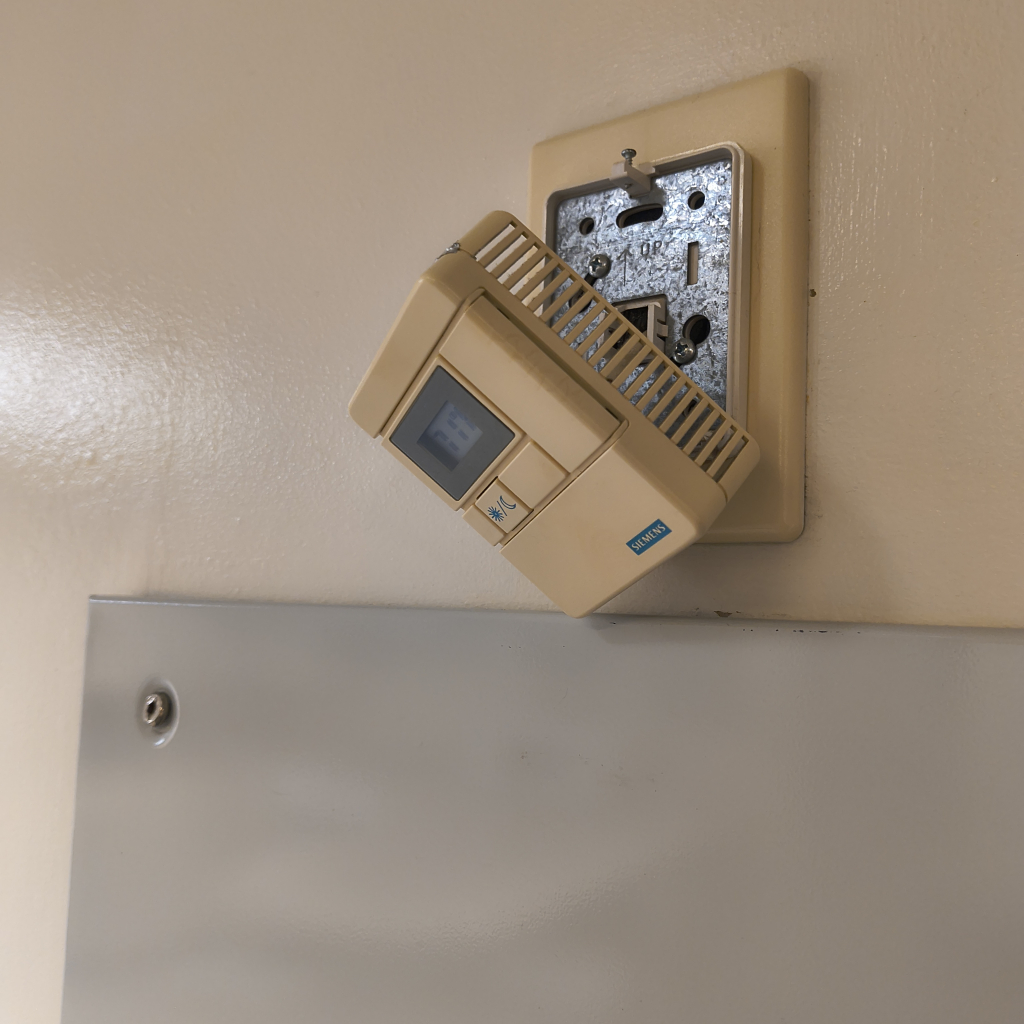
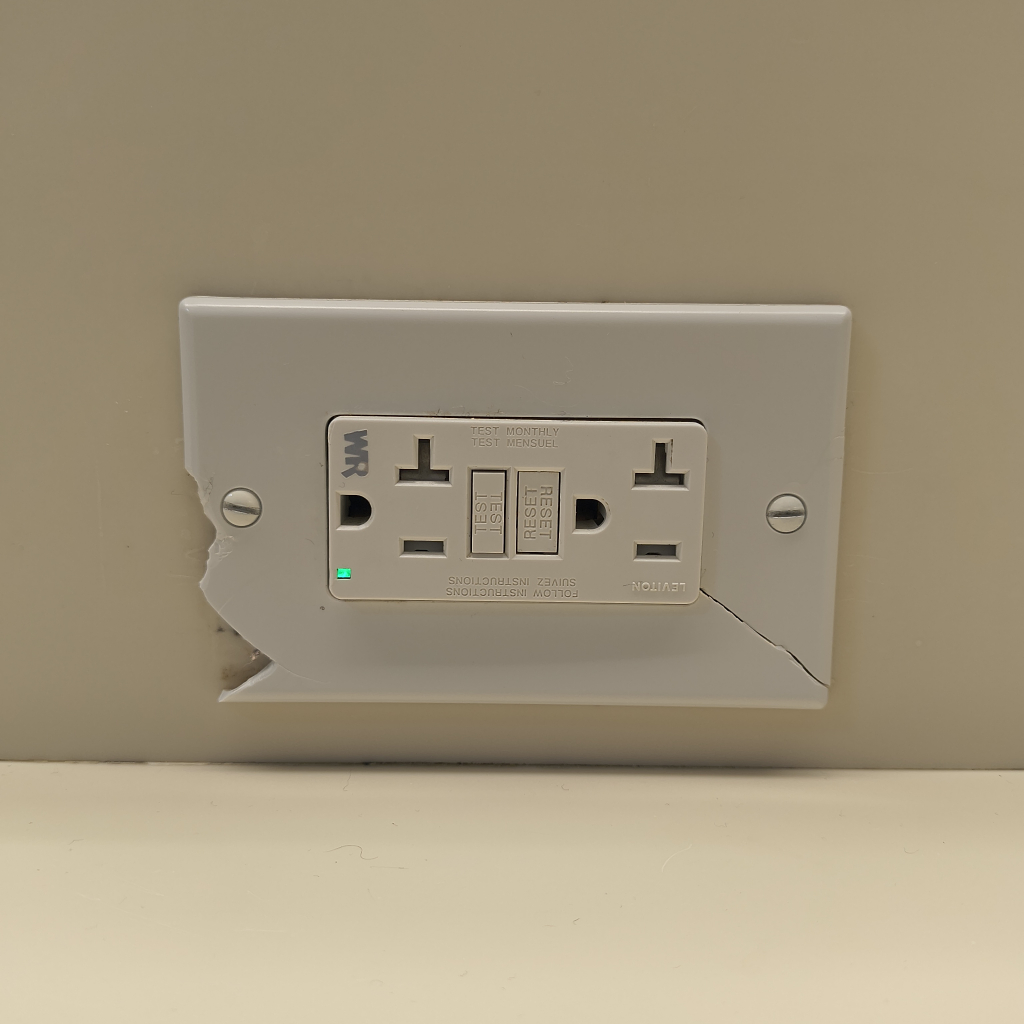
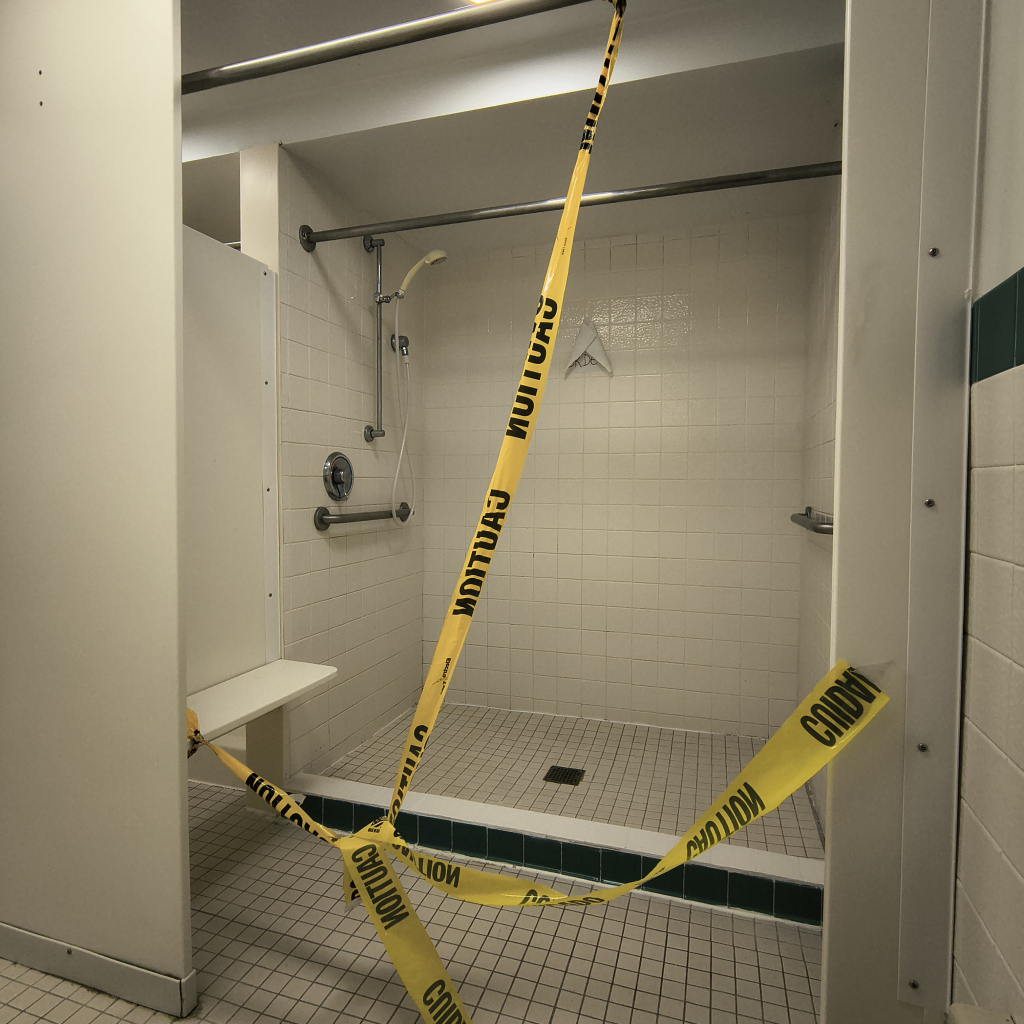
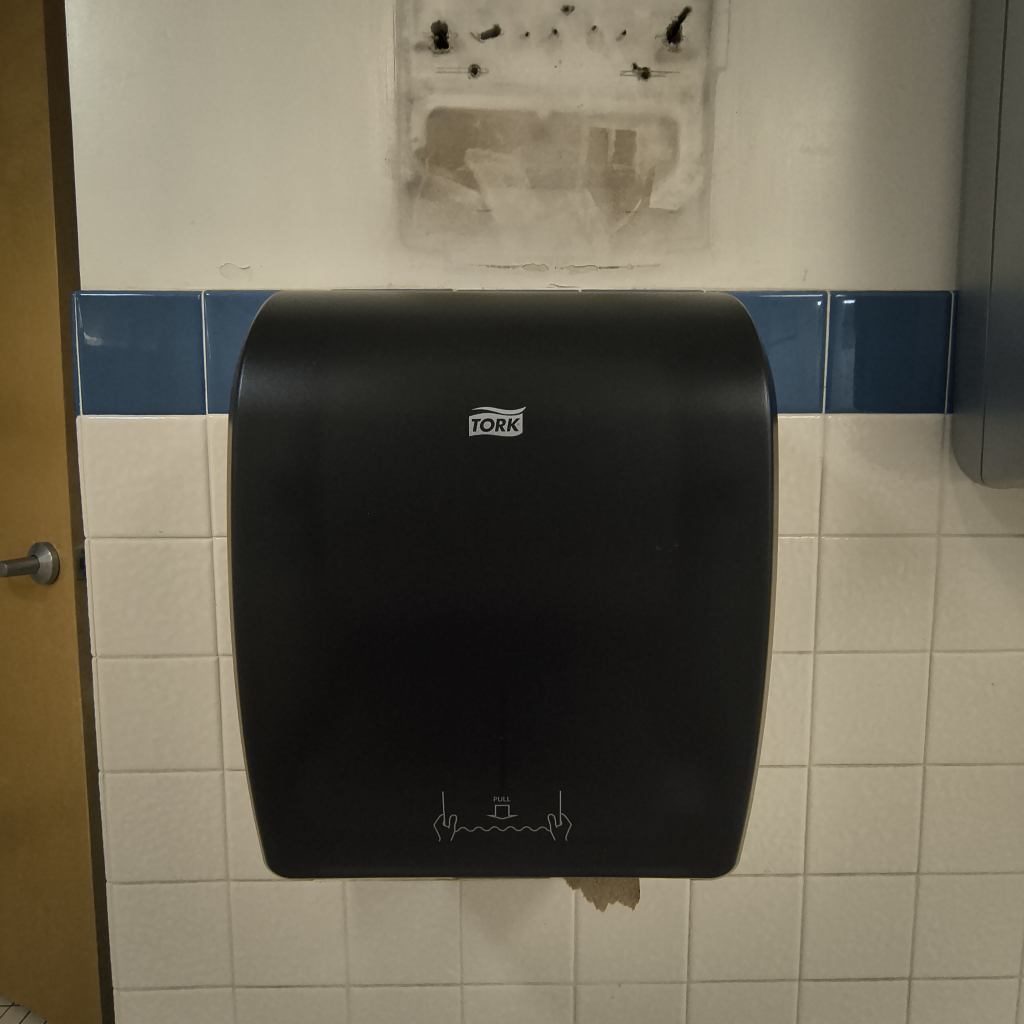
M. Courtien ’26 who lives in Bennett House, attested the drawers and thermostat in her room are broken. “I submitted a complaint to FMS and ResLife in the fall and no one ever followed up on it.”
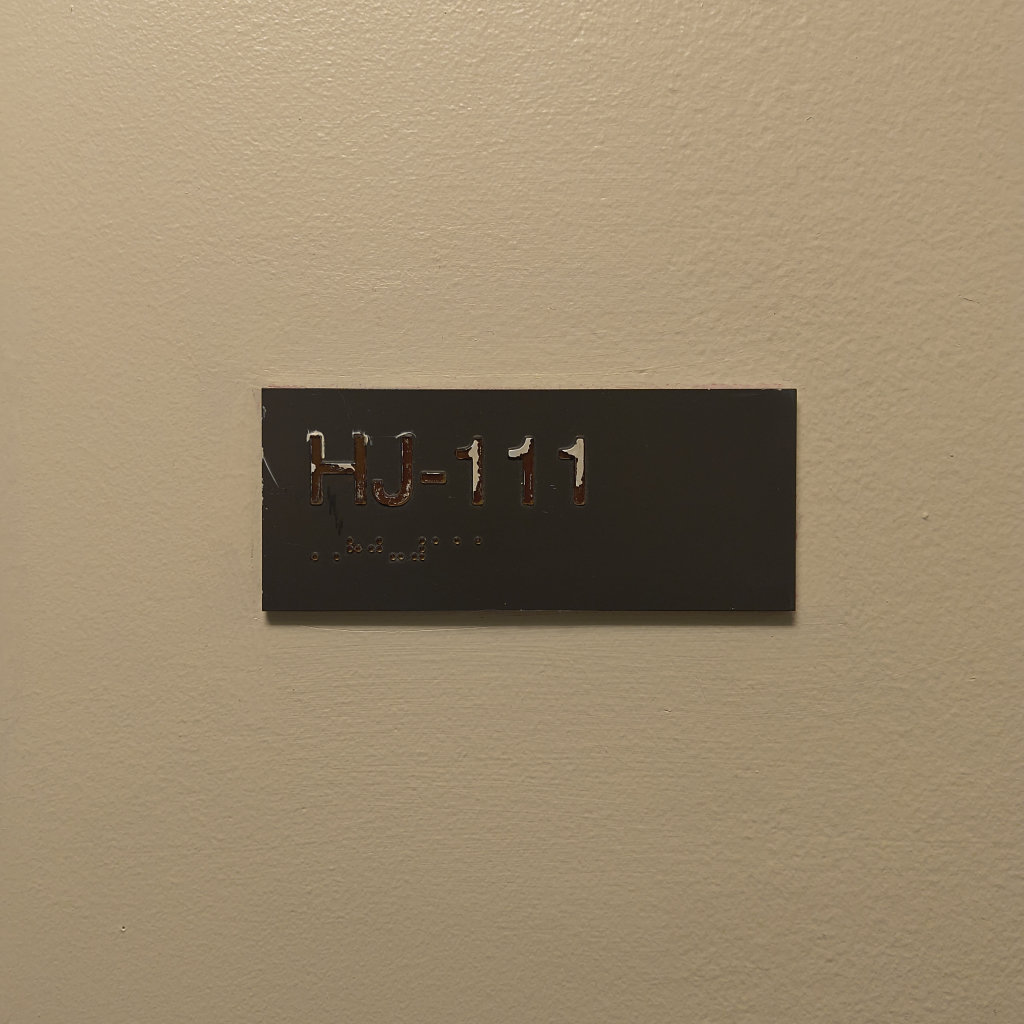
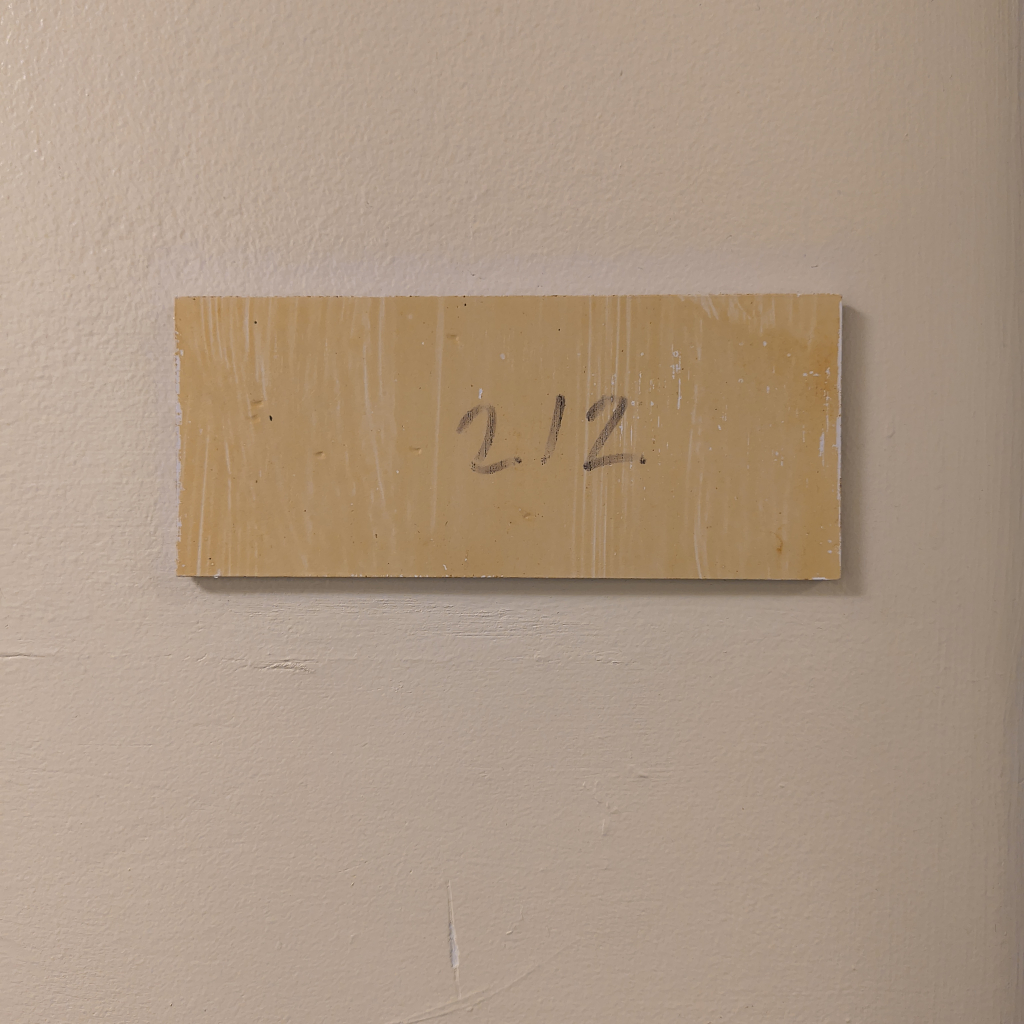
Even the signage is poor. The room numbers in Jeffrey House range from faded or badly printed to written on a slab or the wall.
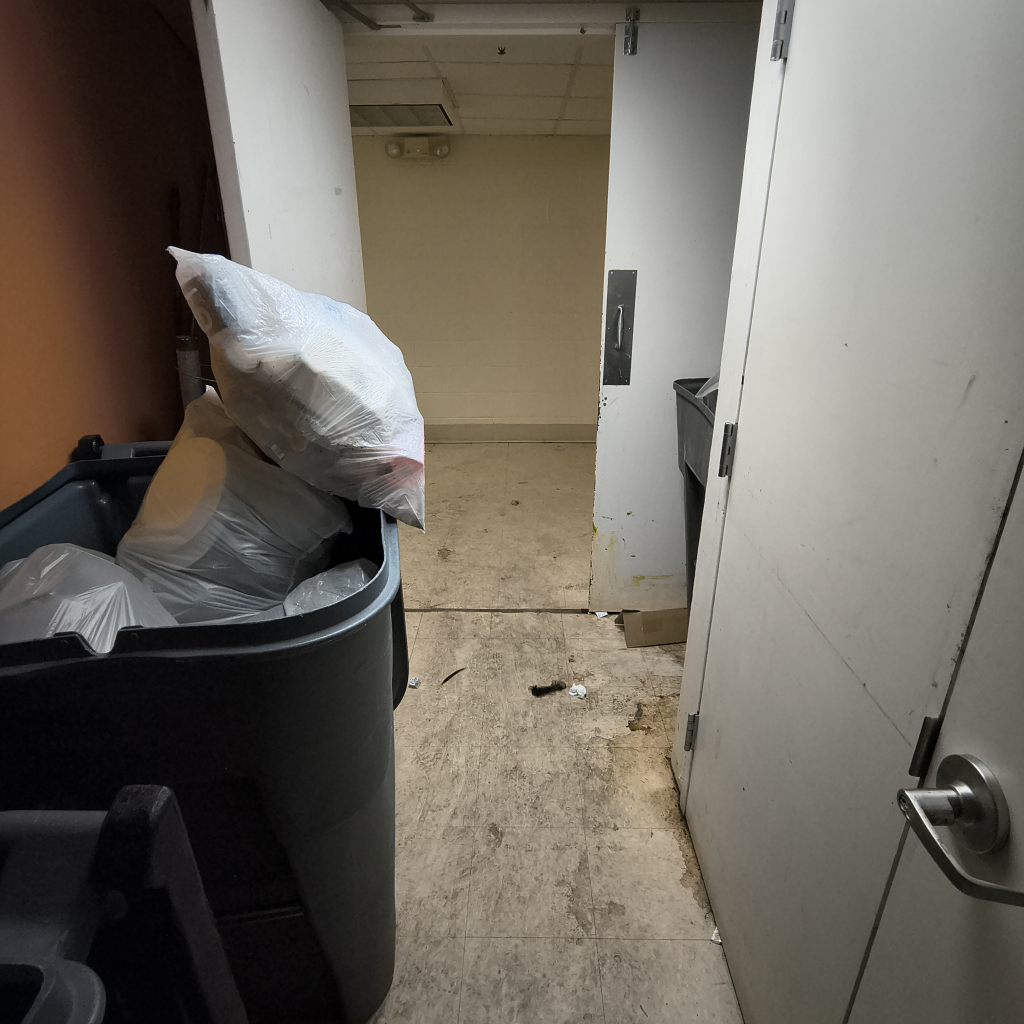
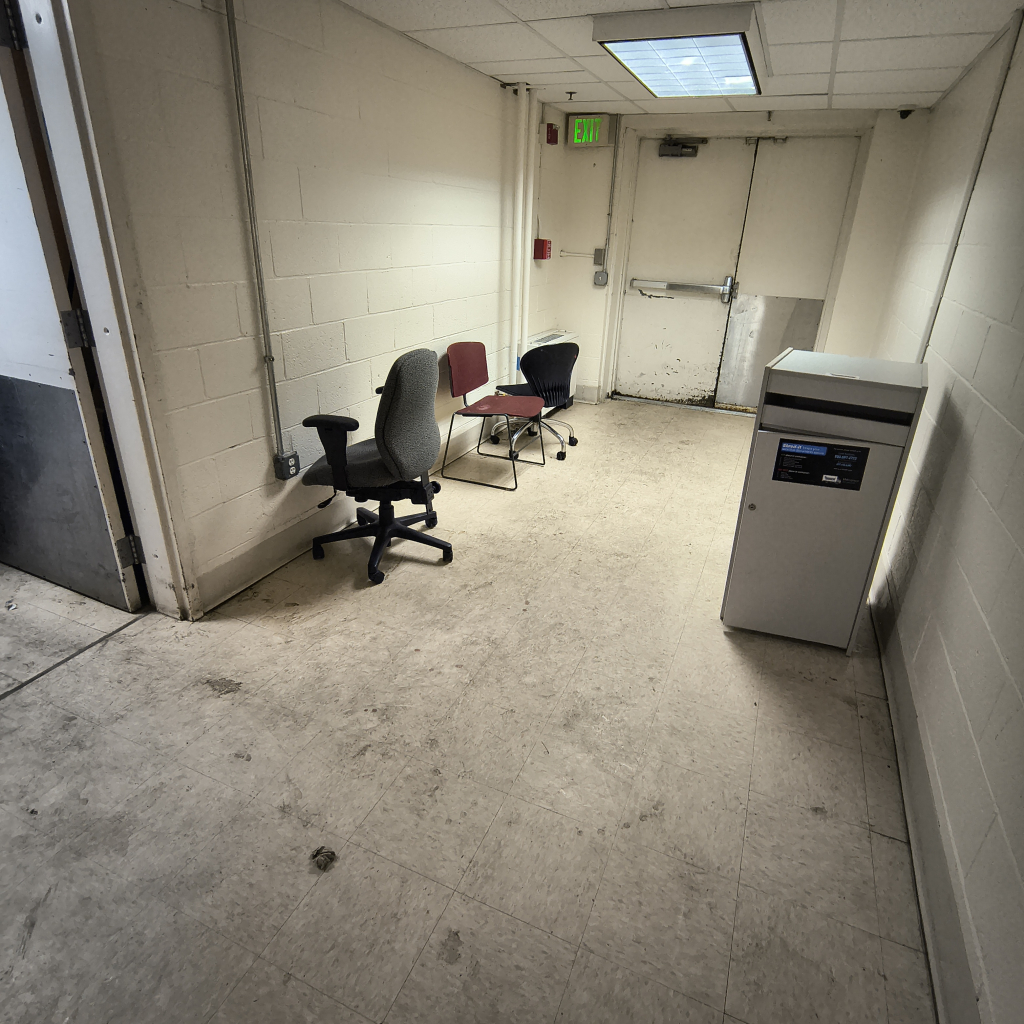
Finally, there is a lack of cleanliness. This is partially due to littering in common spaces, but it is mostly due to neglect by the college. There are cobwebs in staircases, light fixtures full of dead bugs, surfaces covered in rust, and carpets that haven’t been washed for years.
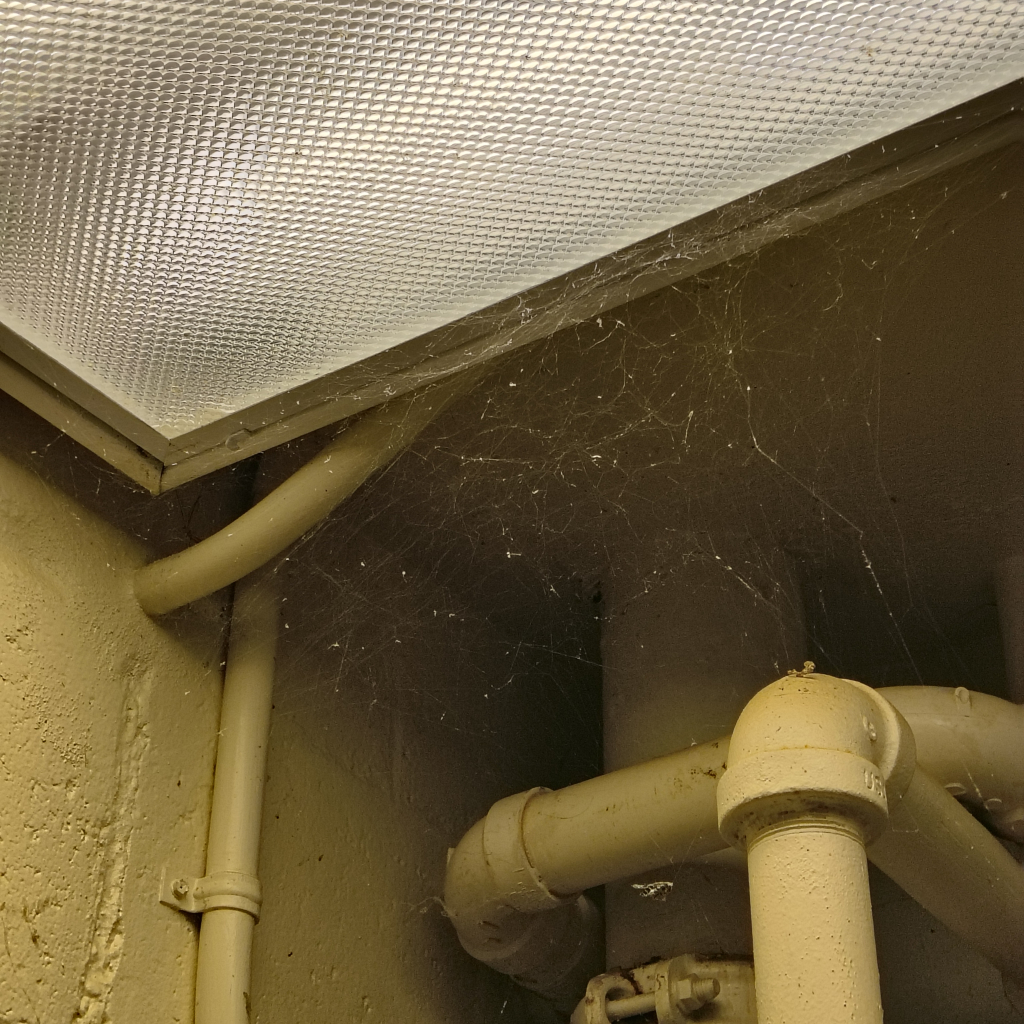
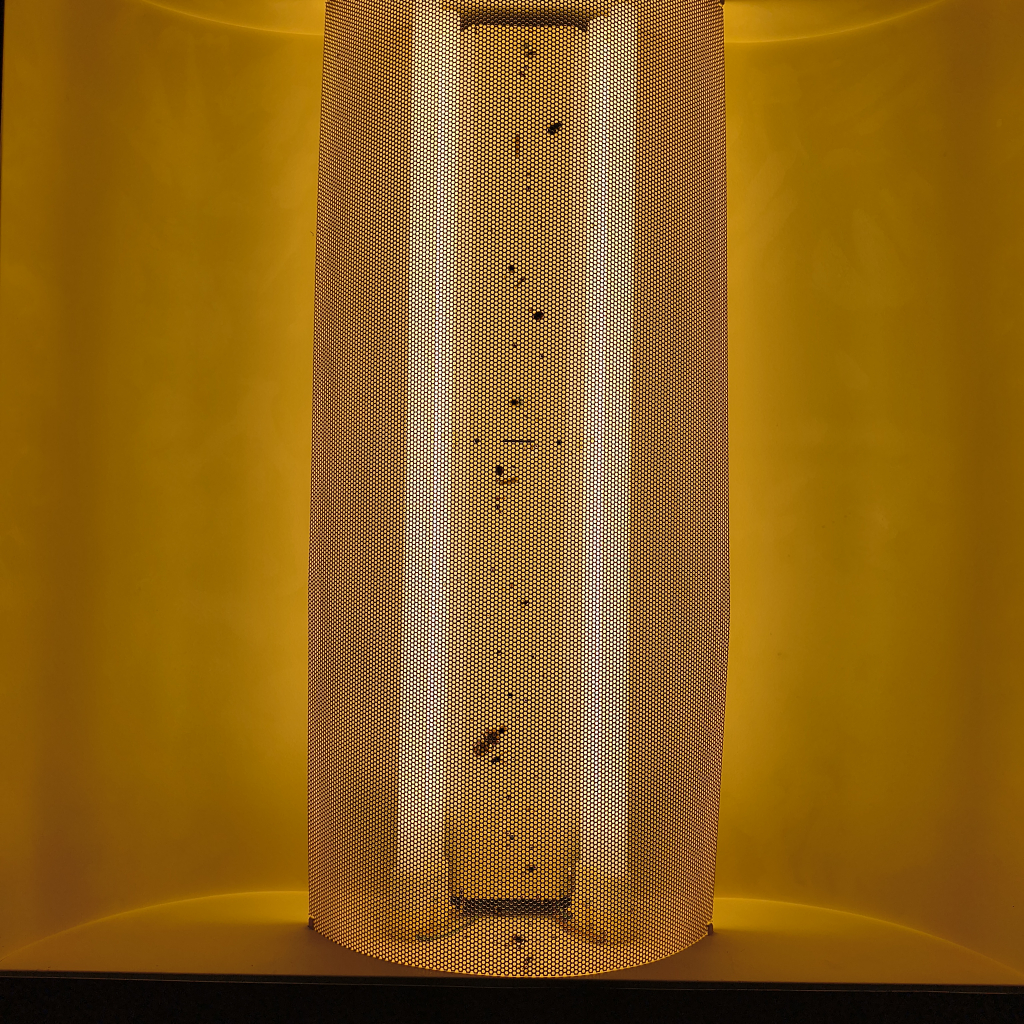
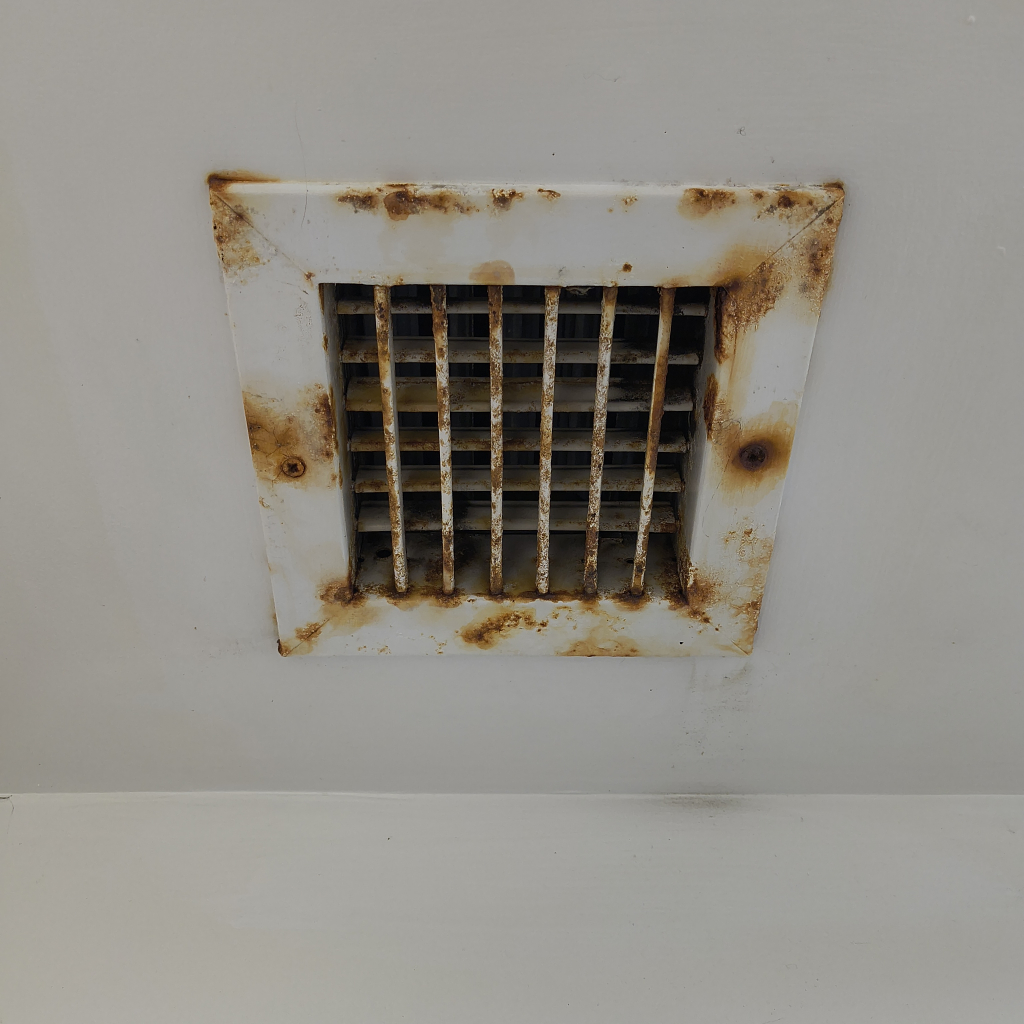
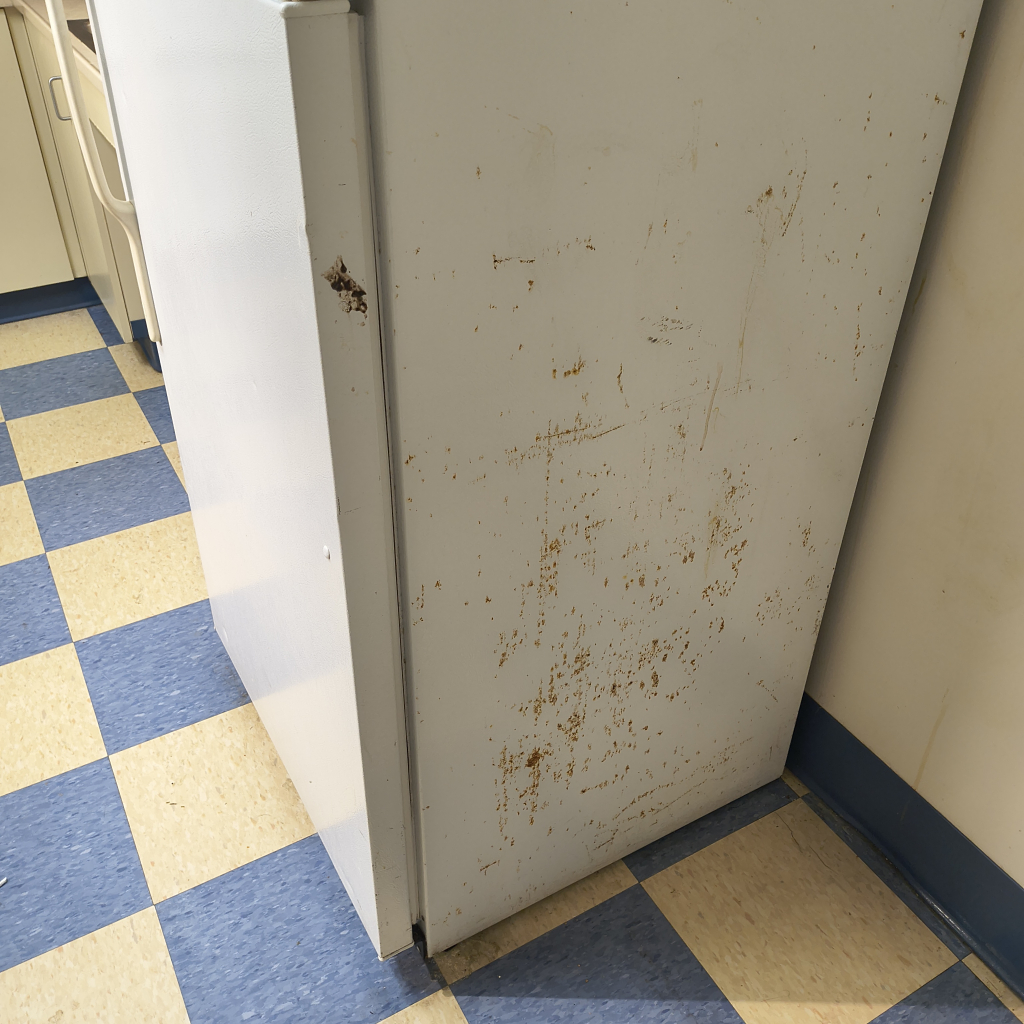
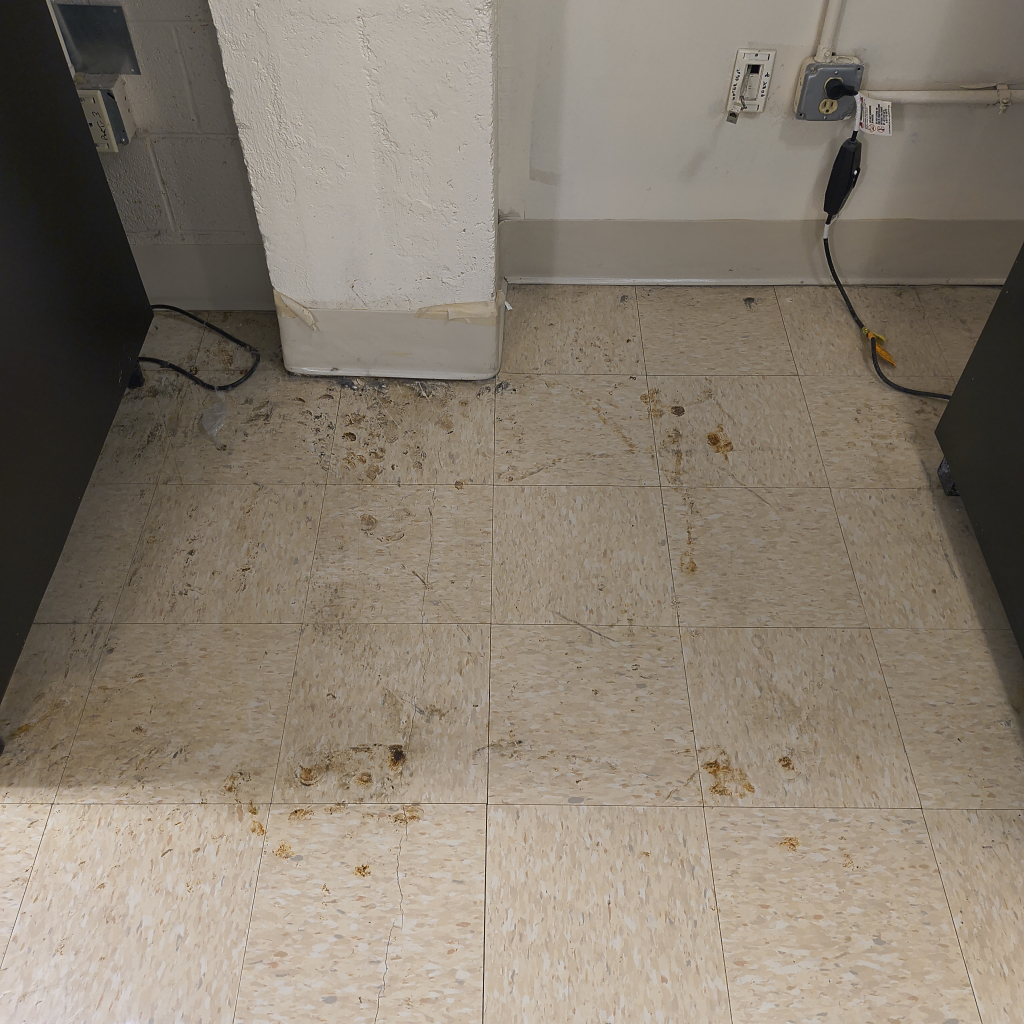
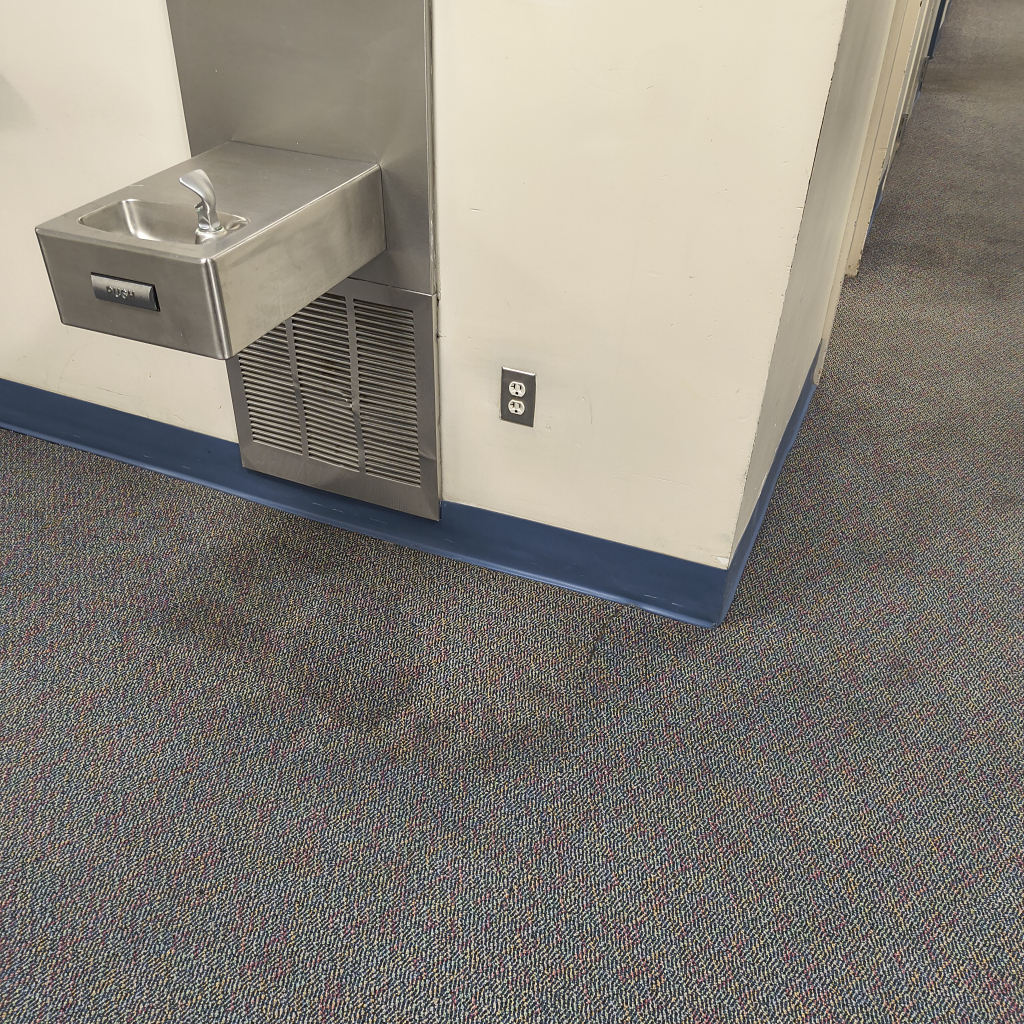
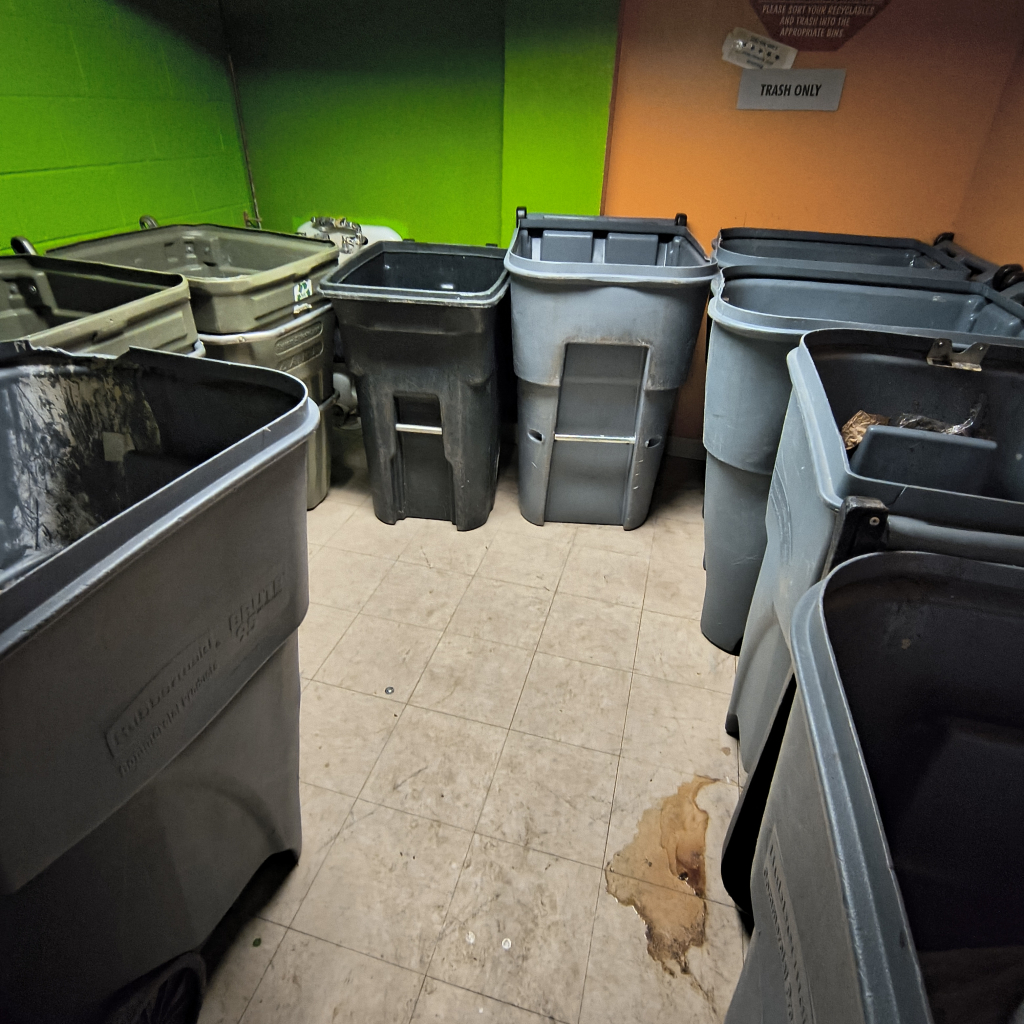
The trash room is especially bad in this regard, being covered in sticky substances and attracting plenty of wasps. Its small size does not help.
With all of Heubeck Hall’s issues laid bare, I have some thoughts to add.
I do not believe Heubeck should be closed. This may sound surprising, but given how many student spaces and administrative offices are located here, it would be a disaster for the community. However, these issues must be addressed now.
Students pay and alumni donate far too much for these living conditions, and the college needs to show it can spend our money, not just take it.
To its credit, Facilities Management Services has begun to improve under its new leadership. When I reached out to Senior VP for Campus Operations Brian Hutzley, he said that “We are committed to working with students and staff on [upgrading residence halls]. This will not all happen overnight, but we will start this process once we have a broader assessment.” There are reasons here to be optimistic, but not enough to remain silent.
Assuming there are no hazards related to water intrusion, I believe the college should launch a deep-clean of Heubeck, then continue onto a programme of fixing thermostats, furniture, signage, outlet covers and showers. Ceilings, walls, and floors should then be addressed.
Some fixes will have to wait for the renovation of Heubeck Hall in 2033–38 (see Page 137 of the Campus Master Plan), but this must be clearly communicated to students. If improvements like this are prioritized, Goucher College can address one of its biggest weaknesses and give students another reason to finish their degree here. But until then, upperclassman housing will continue to feel like a bait-and-switch, and students’ expectations will continue to lower. Dear reader, what do you think?
All Photos By Milo Silverman ’27







Be First to Comment