
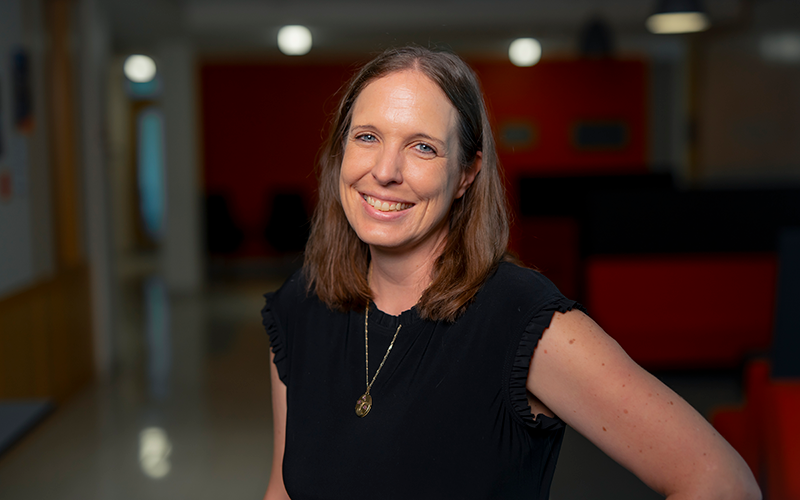
Until a conversation with my Applied Calculus professor, Dr. Kasparek, I wasn’t aware of a new 4+1 Program in the works. I thought I was the last person to know but realized there was no information about it around campus, or anyone who knew about it. So, I decided to interview the Program Director herself.
Dr. Kasparek is a relatively new professor to the college and onboarded in July 2025. She has a PhD in Political Science from Temple University. During that time, she spent her summers at the University of Michigan for advanced statistical training. Her background includes International Relations and international organizations.
The MA in Policy Analytics, formerly known as the MA in Applied Policy Analysis, received a name change to make the program more approachable and align the program title with its contents. Nonetheless, it is still the same program with the same course requirements. The program has a number of foundational courses in Data Science where students learn how to train, work, and manipulate data to get results.
Students will also learn how to create policies and identify good and bad policies, eventually learning how to translate data science into policies later in the advanced classes As of Spring 2026, the electives available for students are Education Policy, Health Policy, Environmental Policy, and Social and Public Policy.
With the approval of the new 4+1 program, what kind of students do you see pursuing this program? Who is this program for?
It’s for everyone who likes studying at Goucher and needs one more year to prepare for the job market. While there are specific fields where these skills are more useful, like Public Health, [the program] shares a good number of elements which can immediately translate into getting a master’s degree; the same goes for Data Science.
I am working on expanding the 4+1 agreement with other departments like Economics and Political Science so that more students can have the opportunity to receive two degrees in five years.
Let’s go deeper into the nuances of the program. What would this program offer that, for example, a Political Science degree may not or vice versa?
Political Science is a broad field, and many in the field choose not to use any statistics or any quantitative methods in their work. The program is designed for people who want to use today’s technologies to drive policy. So you have an undergraduate degree in Political Science, you did your research classes, but you don’t yet have the tools to translate all the data into actual policies. This includes voting data in international organizations, the international economy, international conflicts, etc. The undergraduate degree doesn’t get you there. As for Data Science, it prepares you for coding, data manipulation, data mining, and collecting data, but what one still needs to learn is how to translate data into information that people want to learn about, and that’s what’s missing from the undergraduate degree, which is what a student would get from this master’s program.
With the program’s current structure, is there something you wish to see improved or added to enhance the program?
Right now, we are on a good path, having the program practice-forward, focused on social justice, and students being able to take it into any professional field they want. What I want to do in the future, as we build up the program, is expand the options for electives. Currently, we have four electives, but the goal is to get more graduate courses approved within the next few years in fields like Public Health, or specific classes like electives in international economics.
Besides course requirements, does the program also have experiential learning requirements or recommendations built into it?
We don’t have any requirements for internships, since we understand that people work full-time and that they are getting a degree on the side. The college has funding for internships, which I strongly encourage. The capstone is where students can shine, since that’s where they can show off what they’ve learned. For example, if they want to go into Public Health and they’re concerned about issues like child mortality, they can use the capstone to conduct research and put that research towards in their job portfolio. When they go to an interview, they can show that they’ve done research, used real data, and already applied it. It’s not as “practical” as an internship itself, but it helps prepare students for real-world scenarios.
If someone was on the fence about pursuing this program, what would you say to convince them to pursue it?
To start, people have to want to pursue a graduate program, and they have to be ready for it. There’s no point in trying to convince someone who doesn’t want a graduate degree. If their concerns are about the time commitment, the program can always be done part-time. If they have financial concerns, scholarships are available for the first few years at a discounted rate. Students starting their first academic year can get a 30% discount on their degree. Another concern students may have is that they don’t have a degree in Data Science. The stand-alone master’s program has foundational data science courses that will help them prepare without turning them into full-on data scientists. In addition, we have a graduate librarian, amongst other resources on campus, so I show the students what kind of help is available to them. Sometimes, they don’t know what to do with the degree afterward, and I talk them through it to make the search for the right graduate program more approachable.
What kind of work do you see students going into once they graduate?
It depends. For students who are already working, they often use their degree to advance within their field, whether they’re working towards a promotion or switching jobs. Alternatively, for students who do the 4+1 and don’t have that experience yet, jobs are in-demand in the healthcare sector. The healthcare sector lacks individuals who can work at the intersection of data and policy, which were previously separate skill sets, making this program unique. Most programs either train only the policy side or only the data side. If you look at most jobs that require a master’s degree, they typically require a background in data analytics, data manipulation, and coding. At the end of the day, students can go wherever they want with it because it is an application-forward program, and they can go into fields like education, government (once they are hiring again), NGOs, and think tanks; those are usually the biggest contenders for programs like this.
What makes this program unique is the perfect balance of quantitative and qualitative courses, along with the skills students cultivate as they delve deeper into those studies. It trains students to use enough Data Science in their chosen field without needing to be a Data Scientist.
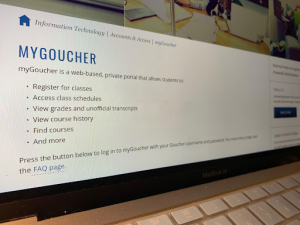
Data Science and Public Health juniors can start applying today; however the online version of the application is still in progress. For the stand-alone master’s program, applications are also open, as the program admits students on a rolling basis. A nonwaivable requirement is one quantitative course, such as basic statistics, at the undergraduate level to prepare for the quantitative aspects of the program. Students can learn more about the program on the Goucher website.
Featured Image Source: Goucher College





Be First to Comment