They Still Insist! Jazz Mastery on Display at Goucher
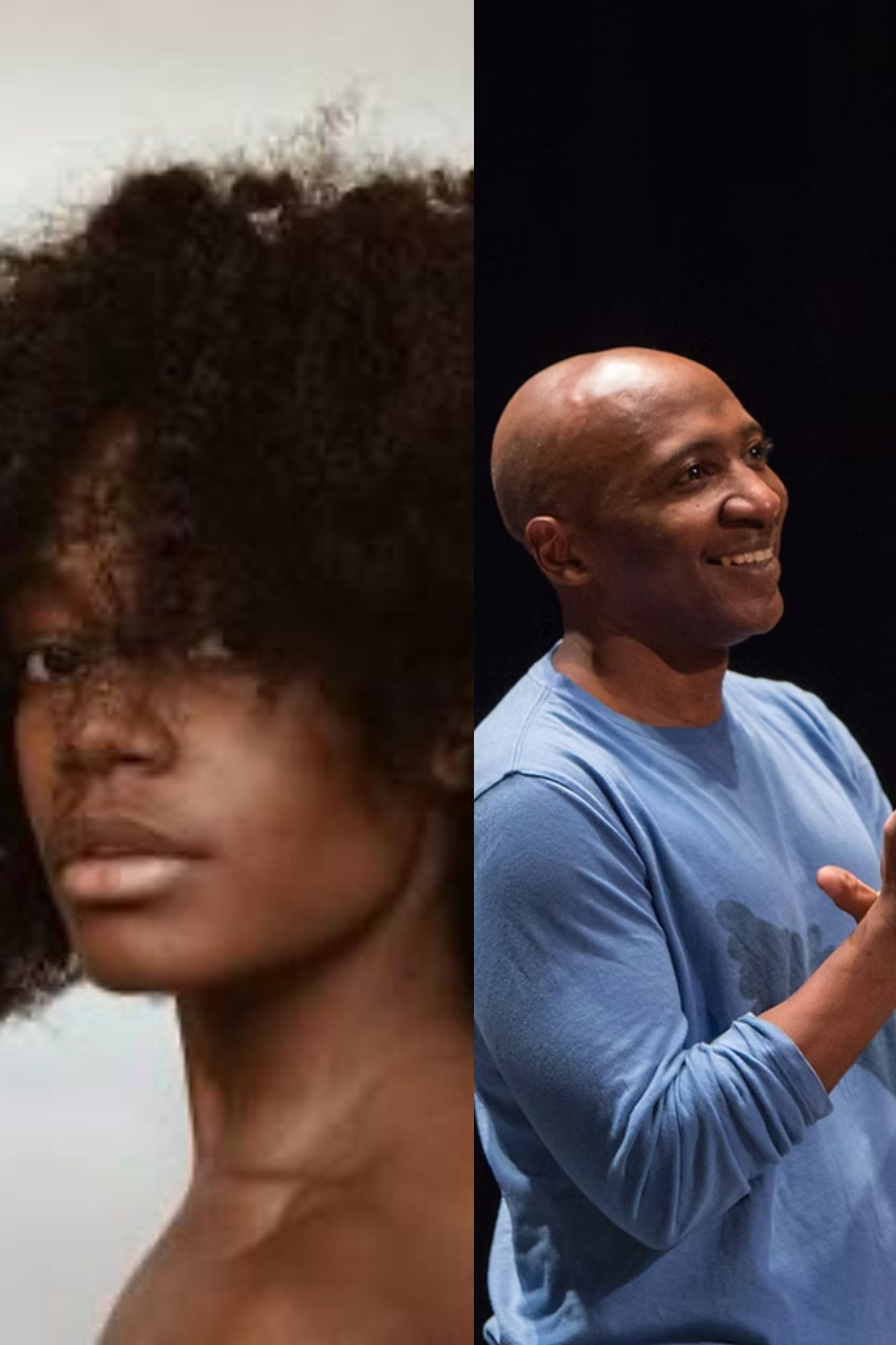
Full disclosure: I am not the first person to write about Terri Lyne Carrington and Christie Dashiell’s We Insist 2025! There is no shortage of discussion about it, about their collaboration, intention, and process; it was recently named the NAACP’s outstanding jazz album of the year. Downbeat wrote an excellent feature with an in-depth discussion with the artists and additional context and history. Even the event page on Goucher’s website contains some insights from Carrington and compares and contrasts 2025! to the original We Insist! But all I’ve read still fails to adequately describe the experience of hearing the album live.
Max Roach’s Freedom Now Suite, the most famous recorded version of which is the aforementioned We Insist! was a landmark political jazz composition. It is a chronological suite about Black history and struggle, starting from slavery with “Driva’man” into emancipation with “Freedom Day” and moving into what was Roach’s present, the American civil rights movement and African apartheid. It’s very clear, however, that since the album was released, the fight for racial equality is neither finished nor linear. We Insist 2025! is both a retrospective and active response to Roach’s work, and the acknowledgement of the inequities and pain that still come with being black in today’s world. “We still insist,” Carrington reminds us on “Boom Chick,” one of ten pieces on 2025!
I had a friend condemn me for relistening to Roach’s album a few hours before the show, saying that I was “spoiling” my concertgoing experience. That couldn’t have been farther from the truth. Carrington and Dashiell have transformed the 1960 release into something new, timely and sonically complex, incorporating vocal harmony, mixed meter, poetry, audience echoes, and the influences of modern soul (“Freedom Day [Part 1.]”) If anything, my relistening gave me a greater appreciation of the genius of both albums.
The show went like so: There were six musicians on stage, Carrington behind her kit, and Dashiell on the microphone. The other four were Milena Casado on trumpet, Matthew Stevens on guitar, Morgan Guerin on bass and saxophone, and Warren Wolf, a new addition since the album’s release, on vibraphone. Kraushaar Auditorium’s stage was bathed in pink light, and the performers invited the audience to move closer to them, considering how attendees were scattered about the space. Kraushaar is acoustically a great space, but considering the closeness that compliments live jazz, it leaves something to be desired.
“Driva’man” reimagined the biting, brassy tone of the original with a smoother, calmer vocal and vibraphone entrance. Face-melting guitar and bass solos from Stevens and Guerin almost suck you in completely, before Carrington’s drums snap you out of trance–you realize how all the musicians turn their eyes to her as she sets the flow and guides the entire ensemble.
“Freedom Day (Part 1.)” opened with a sultry, intimate beckon, a far cry from the frenetic horns that underscore the 1960 version. The soaring vocal runs intermingle with the vibraphone, giving the song’s text a heavenly, hazy quality. This was my favorite piece, and as much as I jotted down notes, my written words cannot do the live experience justice.
“All Africa” was a determined, trumpet dominant groove that Christie interspersed with spoken word, and where the drums answered her in their own sharp way. It crescendoed to a moan of pain, each instrument calling out for the other, eventually finding catharsis under a soft vocal ostinato.
“Boom Chick” asked for audience participation in repeating what Carrington explained was Roach’s famous rhythmic motif, instructing them to either clap the beat or speak it. Over this constructed beat, Dashiell recites a poem, a love letter to Max Roach and his legacy, his ideas. Concluding this was another vocal entrance with a closely following vibraphone, weaving in a complex drum jam similar to the one at the album’s start.
The band communicating nonverbally was one of the most exciting parts to experience, especially as they traded off solos, or just facially appreciated the sounds the other band members made. They settled into a mesmerizing, syncopated back and forth, where Christie eventually brought the audience’s claps back in. The crowd kept this rhythm going long after they were cued to do so. The musicians ending in astonishing unison, it became clear that they had utter command of the room.
“Tryptich: Resolve, Resist, Reimagine” took one of the more divisive pieces (see: the screaming section) from the 1960 album and created something entirely new for sixty more years’ worth of Black history. A ringing, somber guitar and voice duet started things, the drums coming in behind them like the soft beat of wings, eventually working up to a playful yet thunderous percussion solo. The saxophone flew in to join her, building to an unbelievable roar as the rest of the band stared in admiration. Dashiell delivered the thesis of resistance, “NO MORE,” over the wall of sound, the brass shrieking in agreement.
After its climax, the band went straight into “Tears for Johannesburg,” where they slowed into a cool, optimistic cruise, kick drum and bass keeping the pulse. The trumpet came in on such a flexible staccato flow that I initially mistook it in my ear for a second guitar. Slowing dramatically to a close, the piece spanned and stretched over itself, garnering murmurs of awe from the crowd.
“Dear Abbey,” the second love letter, this time to We Insist!’s female vocalist Abbey Lincoln, was all spoken word and restrained drums. It is a love letter to Lincoln, yes, a “victim of complicated times,” but also a love letter to Black women, Black musical tradition, and matriarchy. This is part of a longer poetry section, with “Freedom Day (Part 2),” “Freedom Is…” and “Joyful Noise” expanding upon what intersectional freedom in the 2020s looks like, as well as reminding the listener of the exigency and need for this album.
“Freedom is going to elementary school without walking through a metal detector.” “Freedom being black and walking through a white neighborhood with no fear, with Nina Simone in your ears.” Dashiell addresses everything from queer rights, class, food inequality, addiction, to prison reform.
“Freedom is having space to create,” she ensures, and at the end of her manifesto, it’s clear she’s created that space tonight, taking a break from the microphone to take over on vibraphone. Wolf, the vibraphonist, switches to bass. You’re reminded then that you’re not just watching a decade-spanning conversation and cry for social justice, you’re also watching six mind-blowingly talented musicians do what they do best. The horns play in tight unison, before the guitar leads the band into a gentle fade out.
Being at Kraushaar that night reminded me of exactly why I love jazz, and I thought about how much I love the art form several times during the set. I turned to see members of the audience unconsciously rocking in their seats to the sound, or nodding their heads, tapping their feet. Dashiell and Carrington rocked with them, Dashiell accompanying her vocals in the final piece with an unamplified tambourine that crept under the mix like a whisper. With just a quick and sincere goodbye, the musicians left the stage–a long goodbye was not needed. The music said everything that needed to be said.
By Sam Rose ‘26
Featured Image Source: Goucher Events